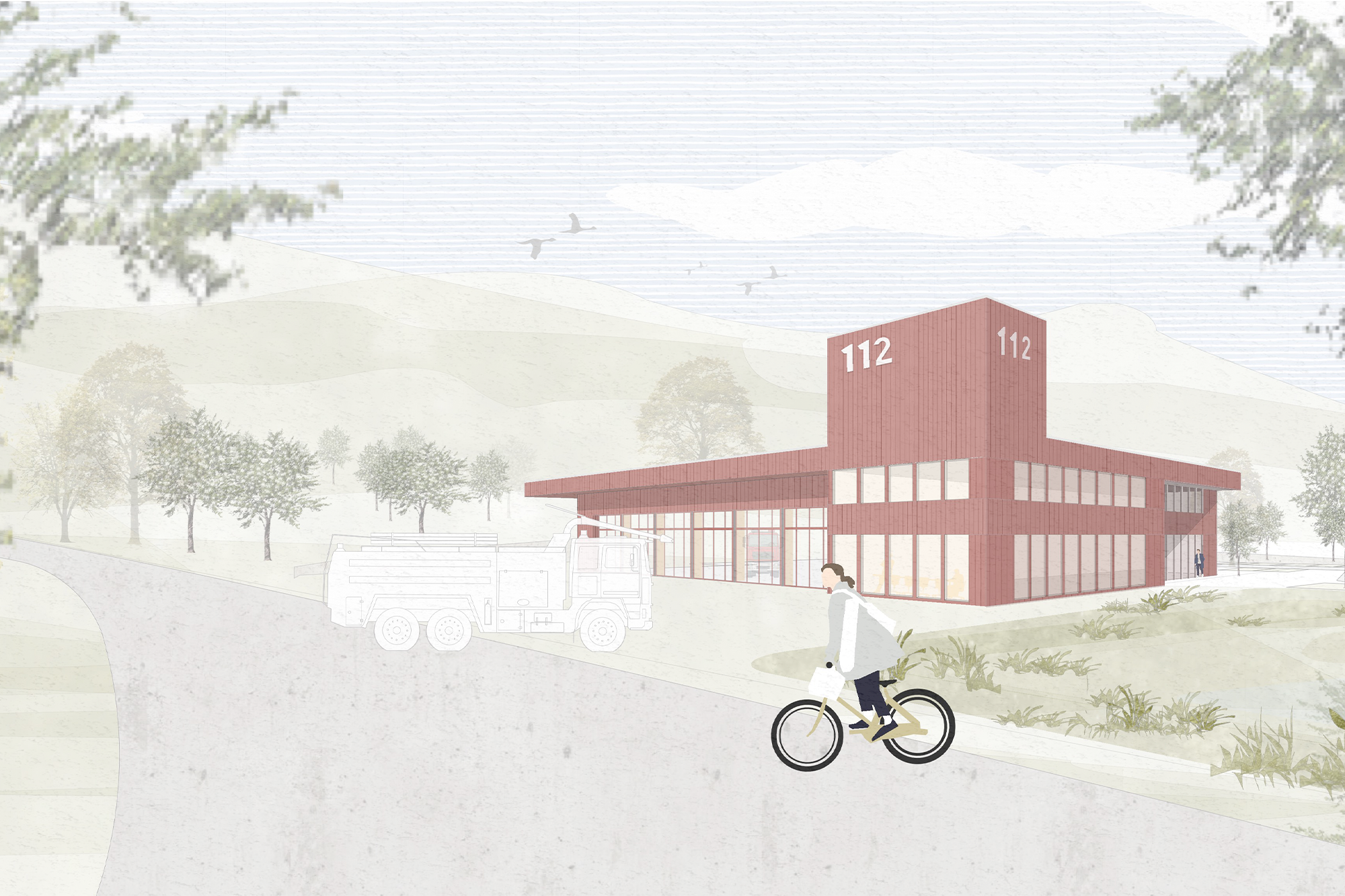

New Sexau fire station – a robust, functional architectural concept between the edge of the settlement and the countryside.
Our concept for the new Sexau fire station in the competition focuses on clear functionality, robust design, and sensitive integration into the surroundings. It conveys self-confidence and conciseness, combines efficient operational processes with high urban planning quality, and was honored with recognition in the competition.
Project data

Urban planning and architectural concept
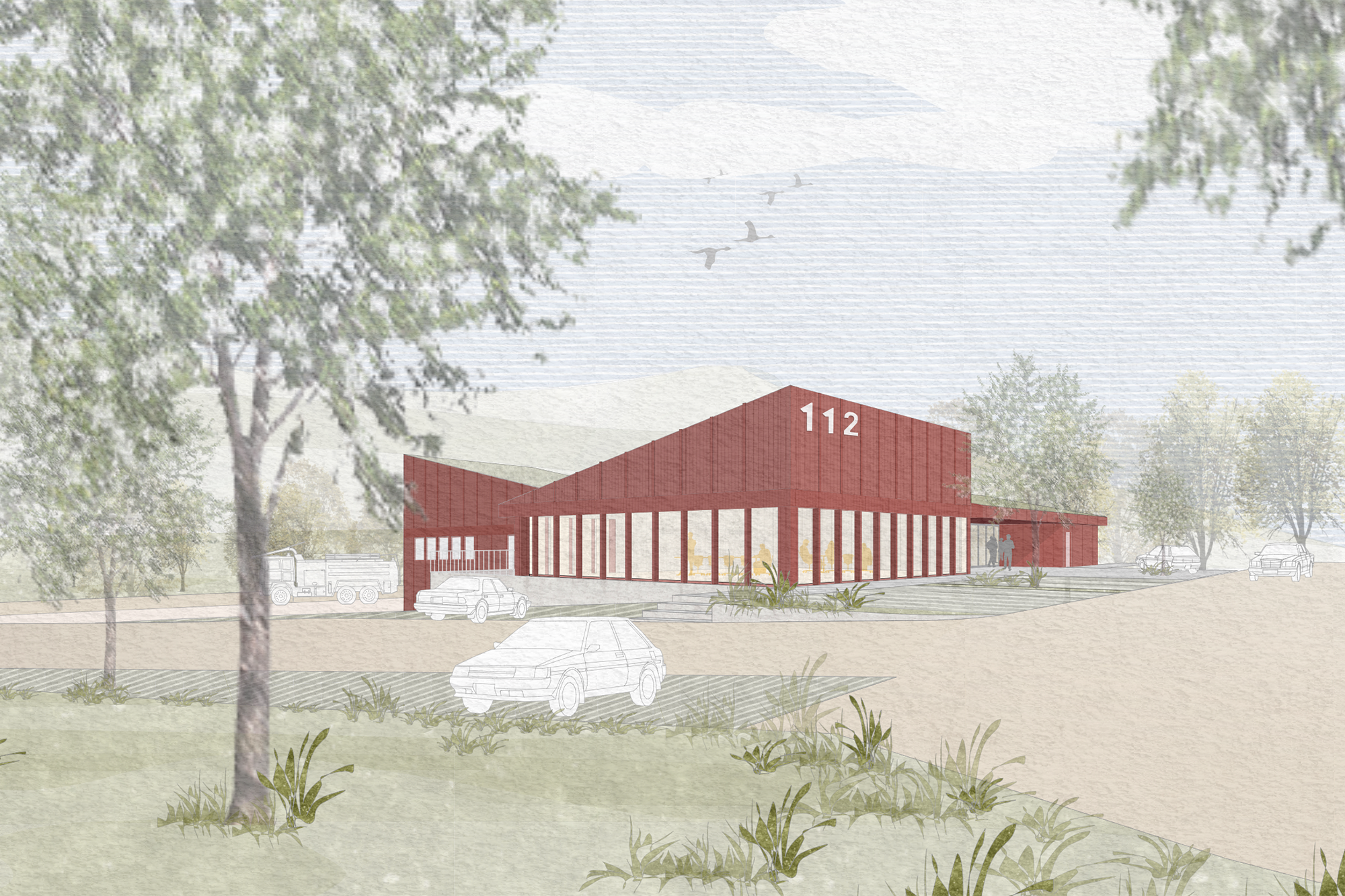
The new Sexau fire station building is designed as a two-story low-rise structure and has a calm, clear presence at the transition between residential area and countryside. The building blends naturally into its surroundings and mediates between the edge of the settlement and the open countryside. The building is compact and robust in design, creating an appropriate public building without excessive design elements.
The practice facade, with a height of up to 12 meters, sets a deliberate, functionally justified accent. It gives the building identity and a long-distance effect and makes the use of the fire department visible to the outside world. The vertical emphasis is an integral part of the architectural concept and deliberately only appears where it is functionally necessary.
The design follows a pragmatic architectural approach. Functionality, cost-effectiveness, and structural clarity are the main priorities. The layout and structure are directly derived from operational processes and structural requirements and are clearly legible.
The main entrance is located in the northern part of the building facing the residential area, creating a clear address. The training rooms are located in the southern part of the building and open onto a terrace with a view of the open countryside. The emergency exit is deliberately not facing the residential area, specifically diverting operational noise away from it.
Functional layout of the building
The functional organization of the fire station consistently follows operational procedures and the requirements of the tender. All areas with high frequency of use and direct relevance to emergency situations are located entirely on the ground floor. The less frequently used, quieter functions are grouped together on the upper floor.
The ground floor houses the entire vehicle and operations area, the alarm organization with direct access to the changing rooms, and the strictly separated black and white areas. The training and outdoor areas are also connected at ground level. This layout ensures short, clear, and intersection-free routes from the arrival of the emergency services to the changing rooms and the deployment of the vehicles. Vertical routes are completely avoided in the event of an alarm.
The administrative, training, and social areas are located on the upper floor. This separates them spatially from the emergency operations area and allows them to be used independently of alarm operations. The elevated location creates a calm atmosphere and a clear overview, enabling a clear separation between emergency and regular operations without restricting internal accessibility.


Open space concept
The open space concept views the fire station as an integral part of the landscape and develops the outdoor facilities based on the topography and functional requirements of the operation. Buildings, open spaces, and technical infrastructure are linked to form a robust, coherent overall system.
Two retention basins are located in the north of the property, which serve both regular rainwater management and the controlled drainage of heavy rainfall events. The emergency parking spaces are located in the western part of the property, while the emergency exit is consistently positioned in the eastern part. This functional organization allows for a clear separation of arrival and departure movements and is integrated into the landscape.
Loosely spaced trees structure the property and conceal functional areas such as alarm and visitor parking spaces, the training yard, and vehicle staging areas. Towards the edges of the property, these structures become denser, forming groups of trees and shrubs that create a smooth transition to the landscape. Parking areas and undeveloped areas are largely unsealed and covered with permeable surfaces.
Rainwater management follows a cascade principle: from extensive green roofs to tree canopies and permeable surfaces to meadow hollows. Contaminated surface water from courtyards and training areas is collected separately and disposed of via appropriate cleaning stages. Heavy rainfall events are controlled via lateral green spaces and hollows.


Development, alarm situations, regular operation, and training exercises
Arriving emergency personnel can reach the designated emergency parking spaces directly via the emergency access road. The alarm entrance is directly adjacent and leads directly to the changing rooms. Adjacent to this is the vehicle hall with the operational vehicles. The exit process takes place via the northeast side of the building directly onto the street. A traffic light system ensures safe and rapid entry into the public traffic area.
Inside the building, a clearly structured sequence of rooms—from the boot washing facility to the black areas to the showers and changing rooms—ensures short, intuitive routes and a consistent decontamination process.
The ground floor at street level also houses standby rooms, technical rooms, a workshop, and high-bay storage. Outside, there is a break area with a view of the greenery. The training areas are divided into an instruction zone at the 12-meter-high training facade and a spacious, freely usable training area. The wash hall and delivery area are located in the southeastern part of the building.
The upper floor houses the administration offices, kitchen, storage areas, youth room, and event hall. The youth room and hall can be connected and open onto the south terrace with direct access to the lawn. An access corridor runs along the vehicle hall, creating visual and communicative links between the functional areas and levels.
More views



The Fire Department of the Future
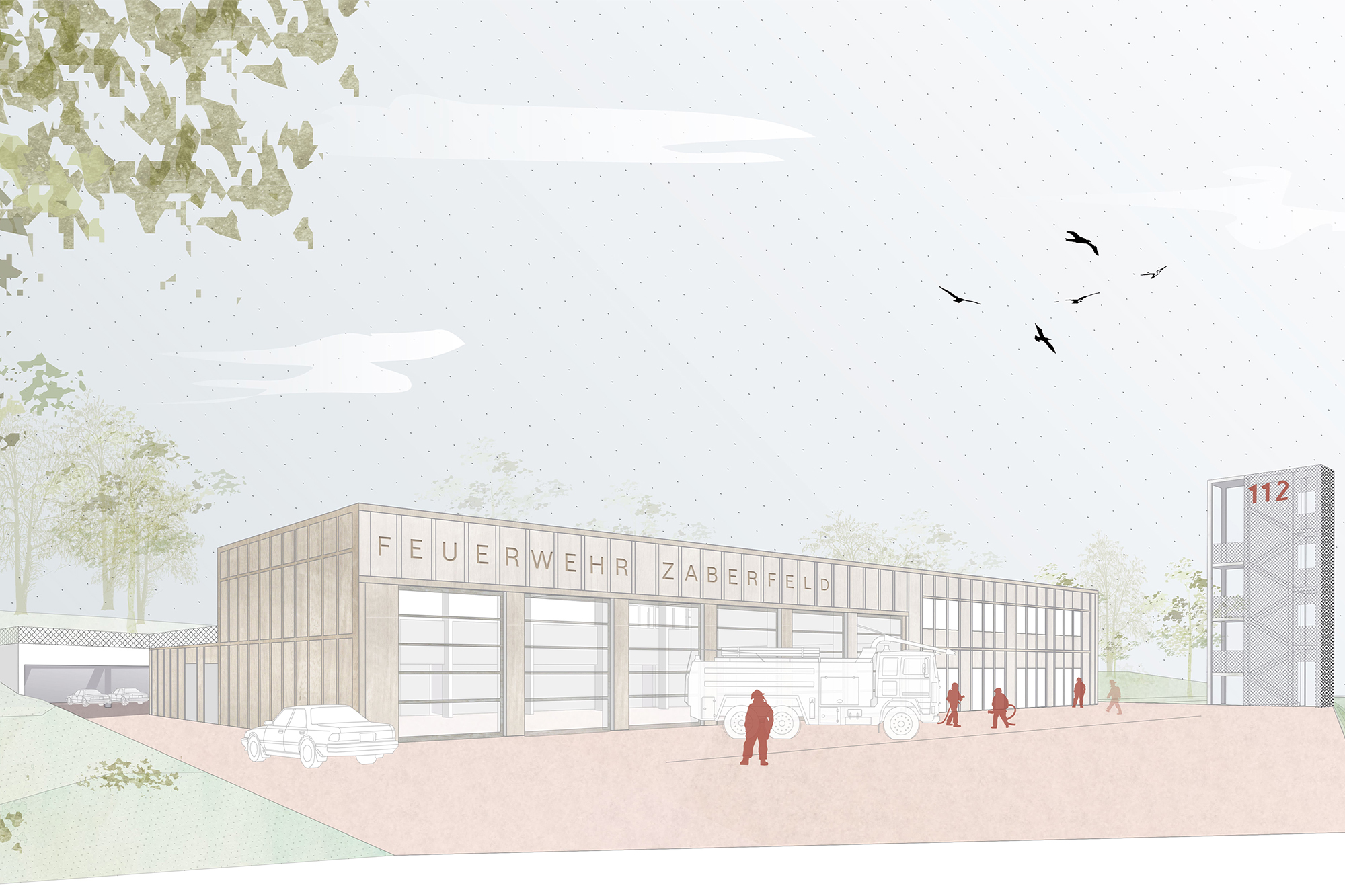
New Fire Station in Zaberfeld
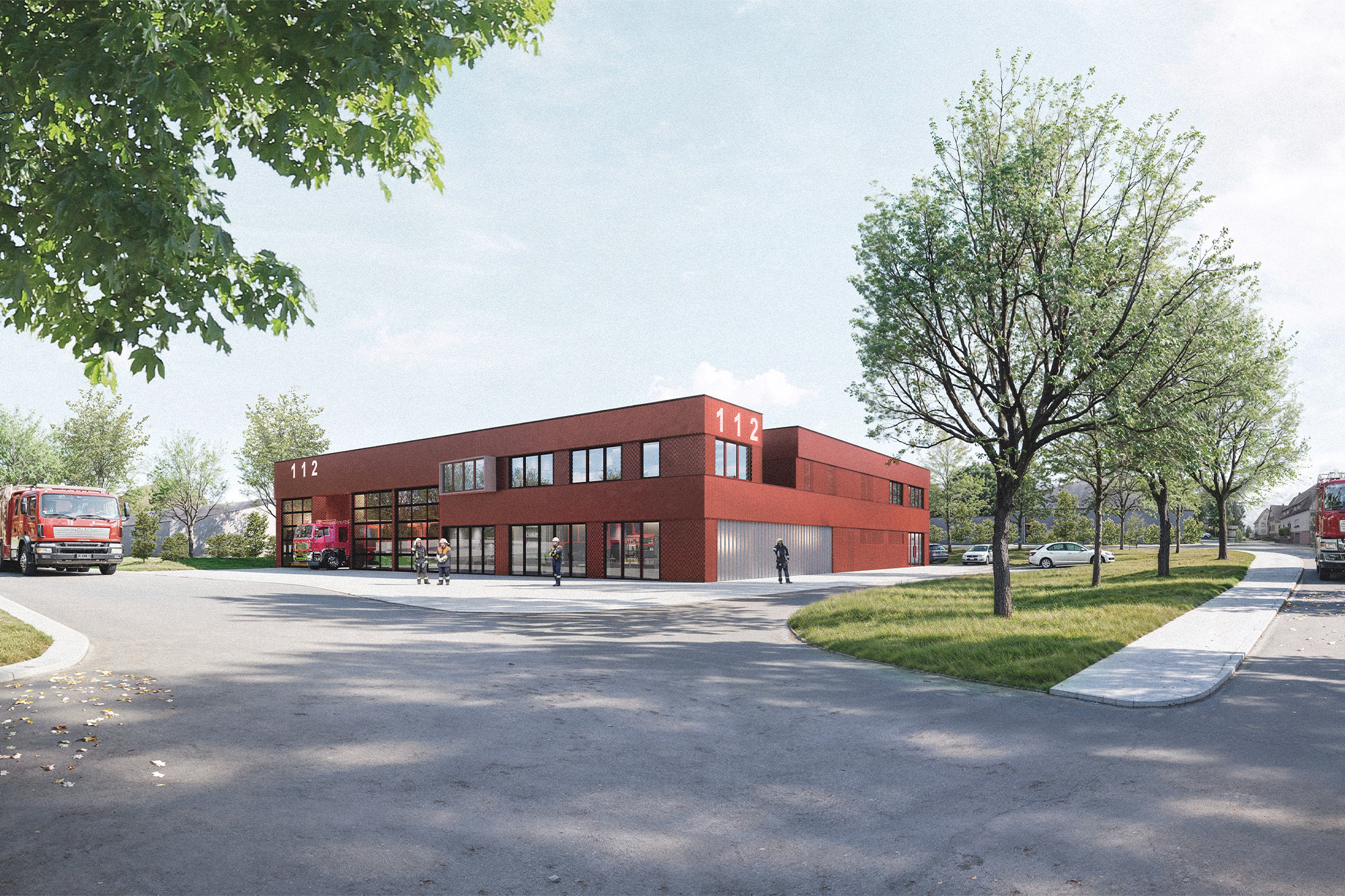
New Fire Station in Nöttingen-Remchingen
New fire station in Haltingen