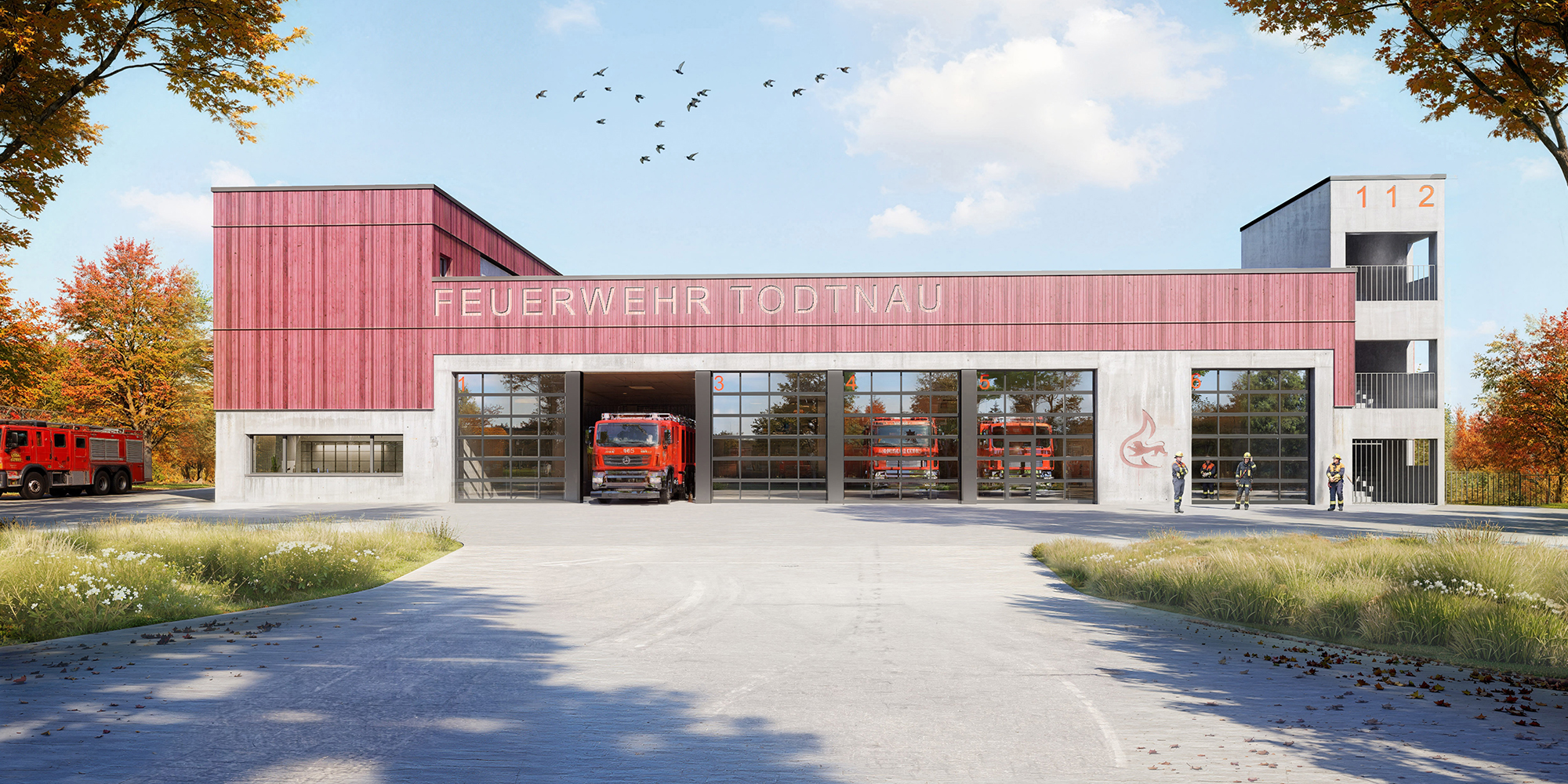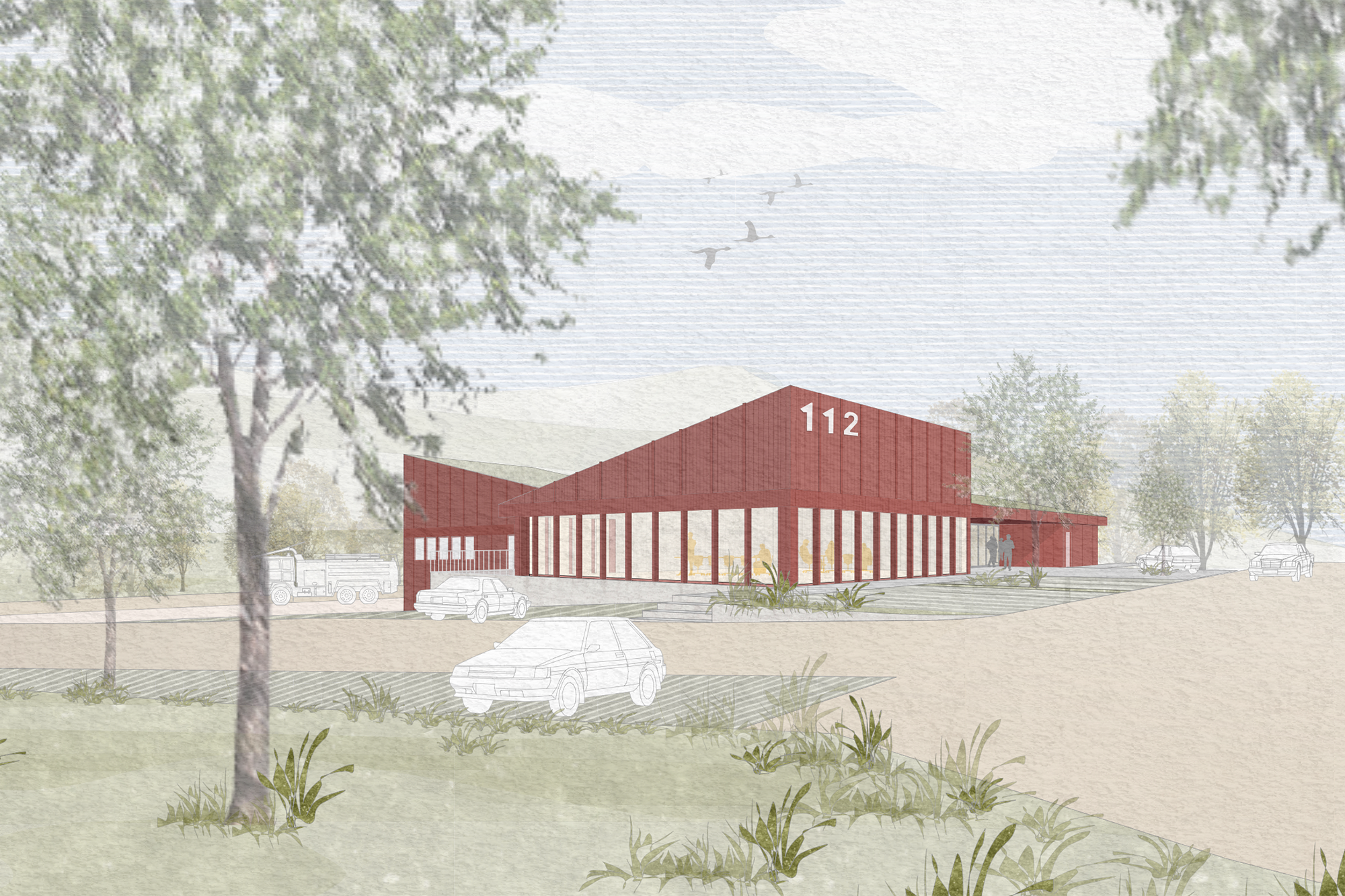

New fire station in Sachsenheim Kirbachtal: Functionally structured, topographically integrated, and creating a sense of identity in the landscape.
As part of the urban design for the new fire station in Sachsenheim Kirbachtal, we developed a concept that clearly structures the different functional areas and, by integrating the topography and open spaces, creates a functional building with a strong identity that blends into the landscape.
Project data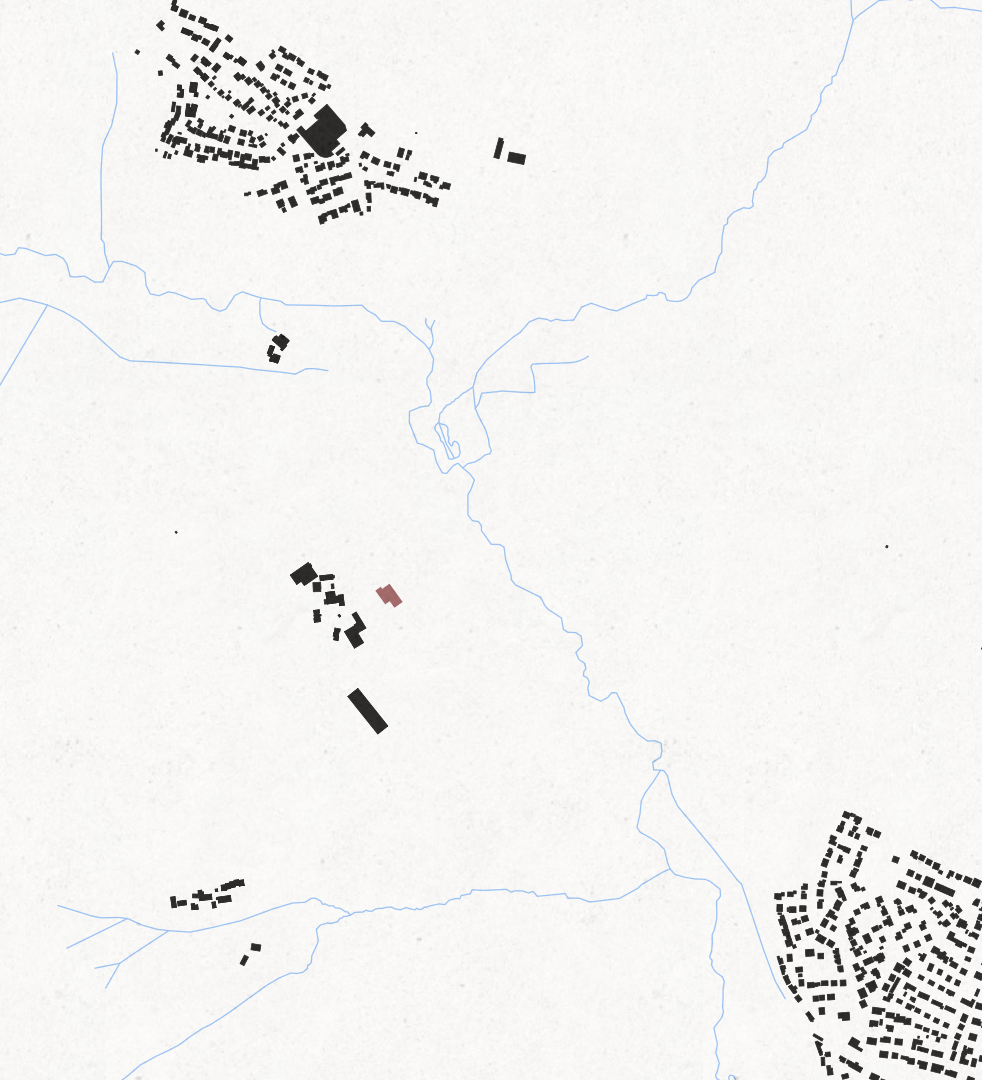
Architectural concept and typology
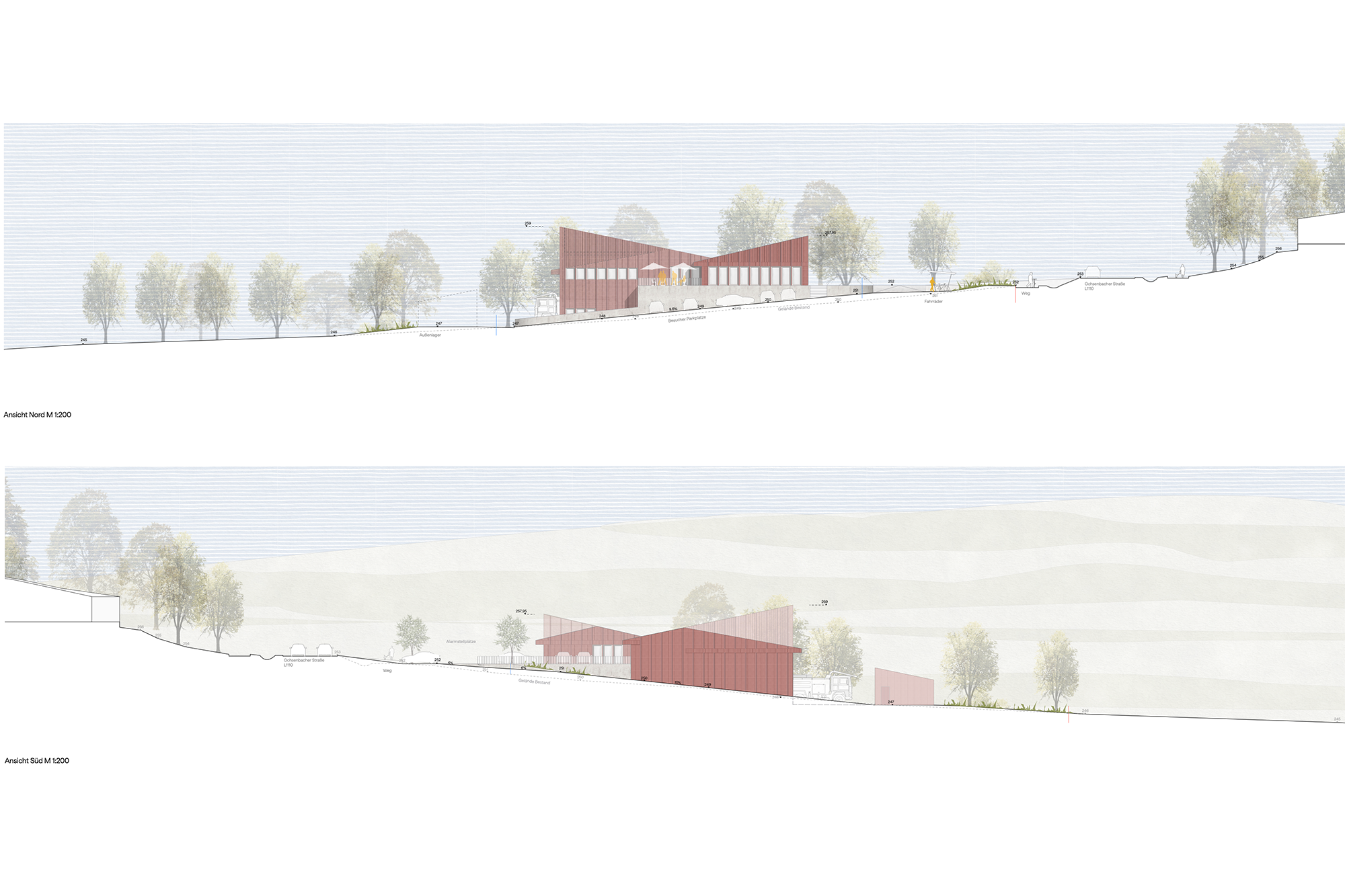
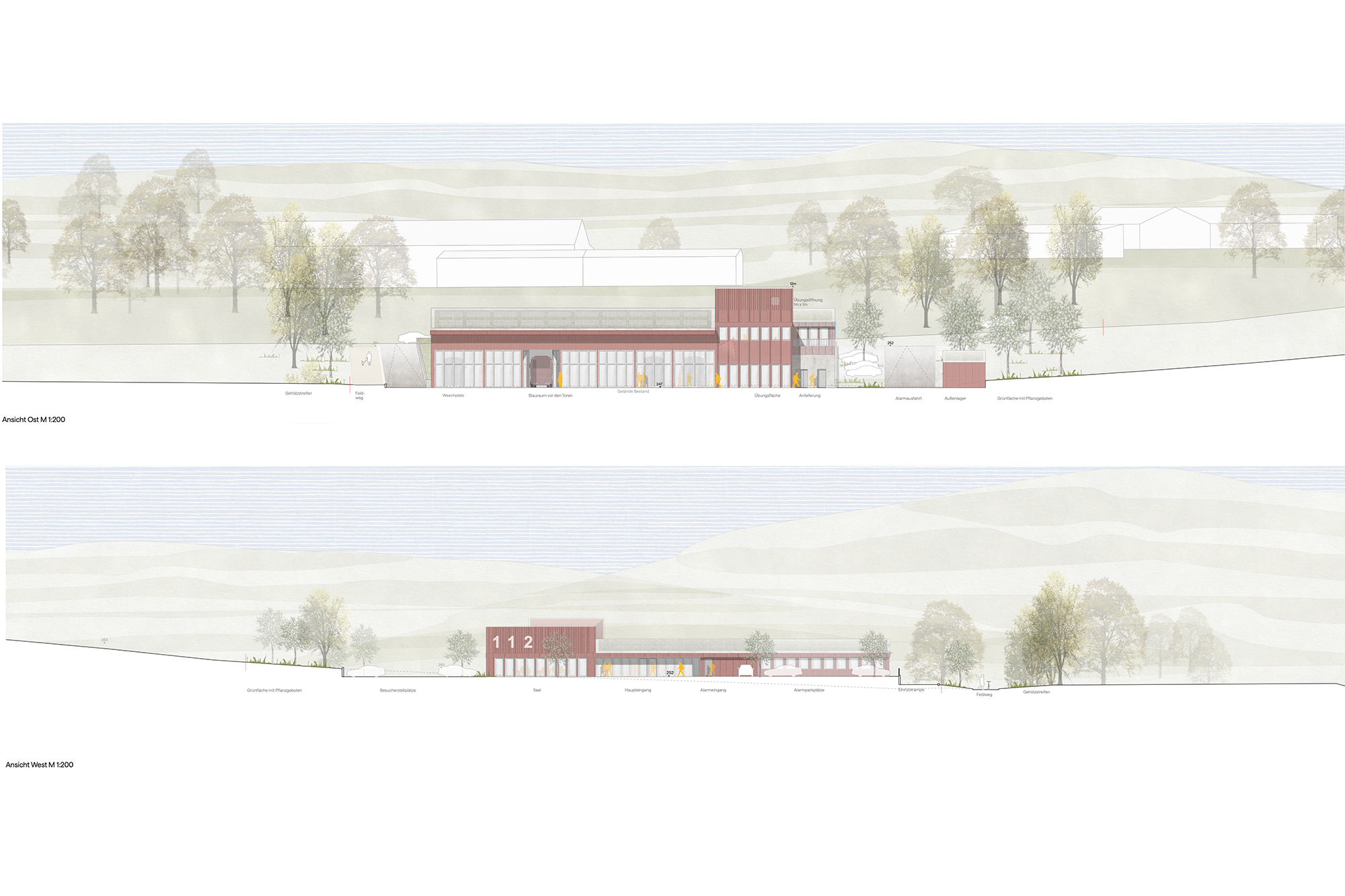
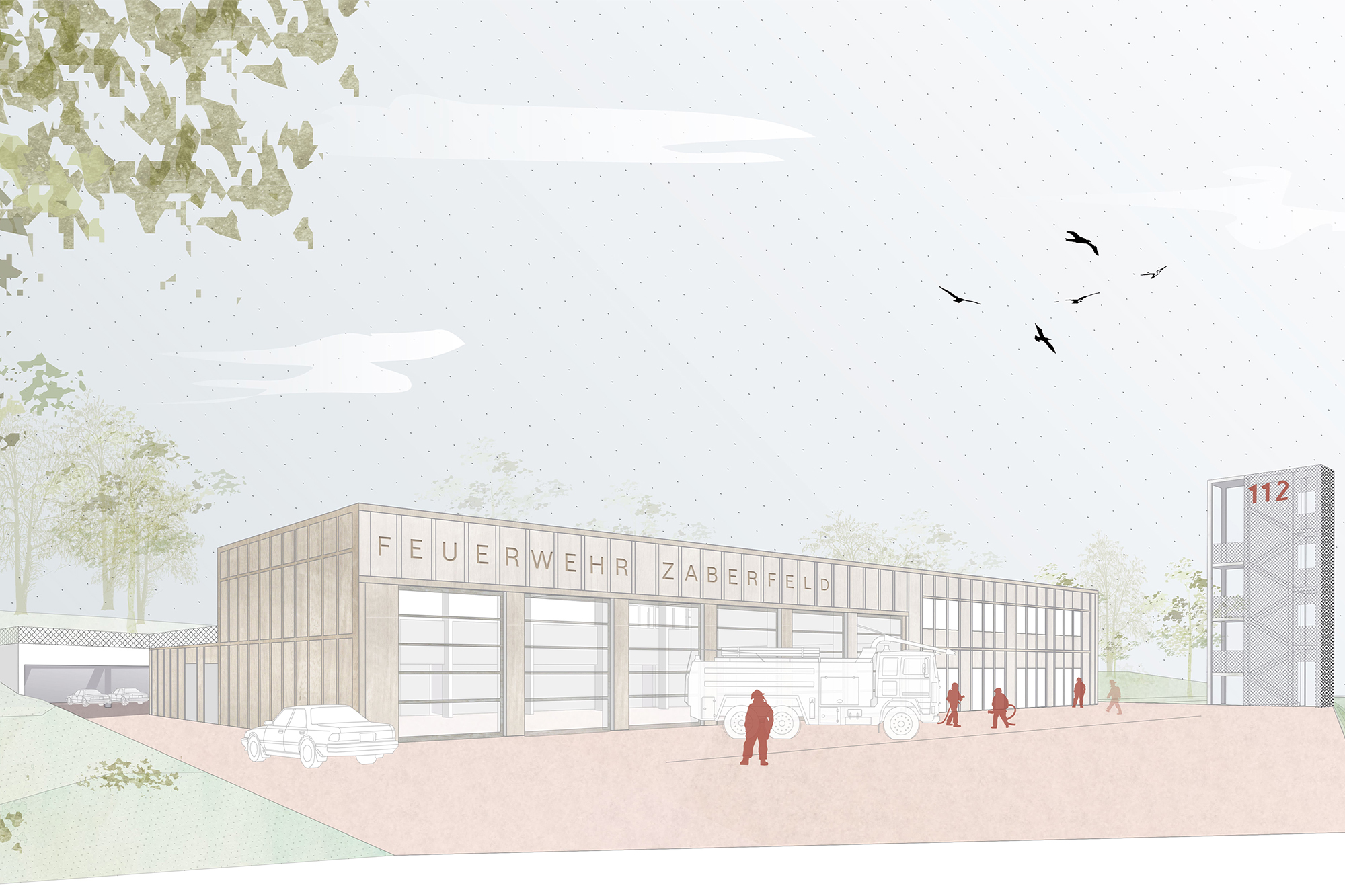
The new building echoes the distinctive roof shapes of the surrounding buildings. Two interlocking structures with gabled roofs form the overall volume. This double roof structure reflects the village-like character of the Bromberg farms and interprets it in a contemporary way. The silhouette opens up to the north in a striking "M" shape: two pointed gable flanks that give the building an unmistakable appearance from a distance. While the valley side has a more barn-like, functional expression, the building presents itself to its surroundings with a distinctive profile that creates a sense of identity.
Urban planning context and design concept
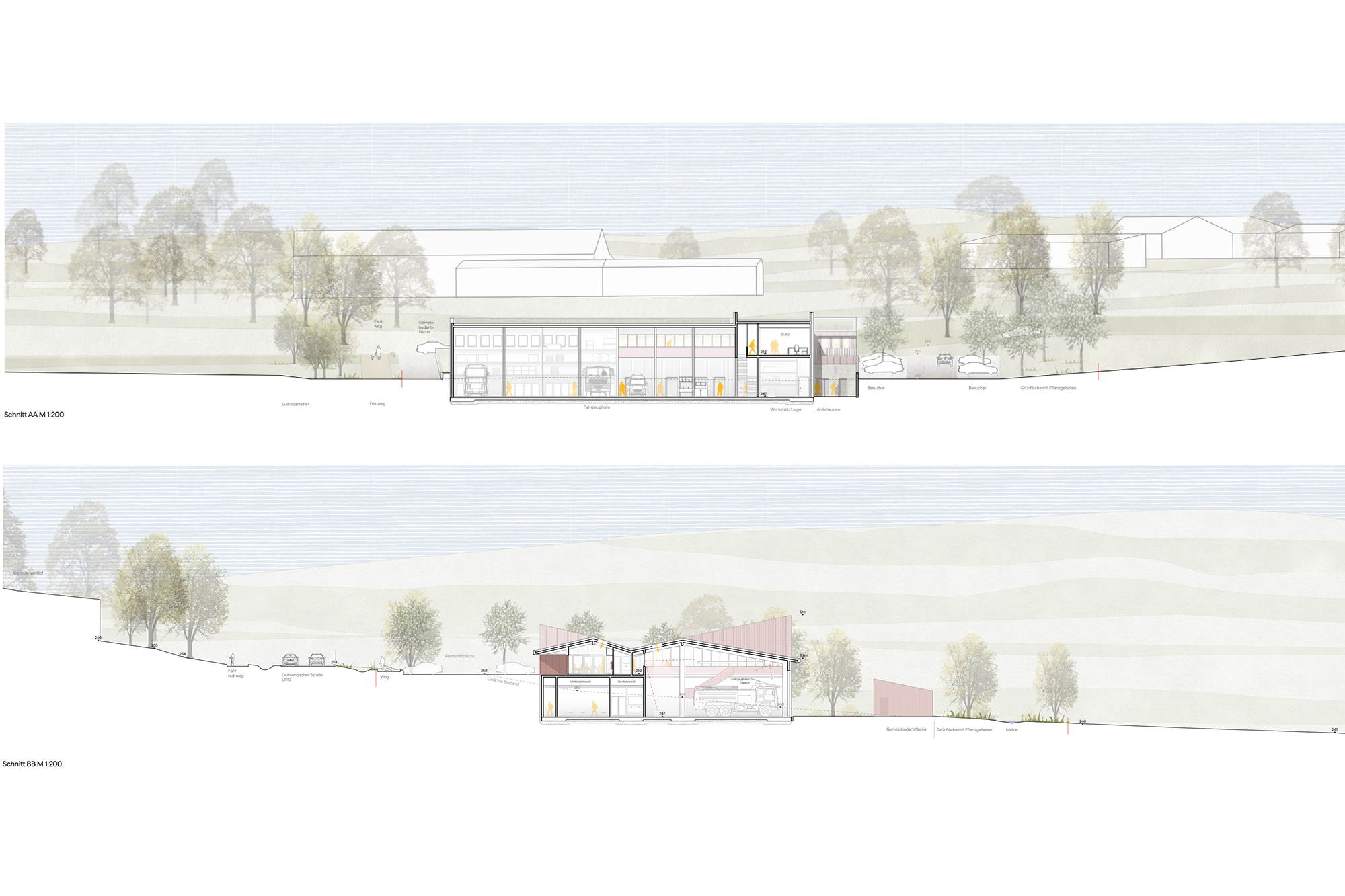
The plot in Kirbachtal is characterized by a sloping topography. This terrain situation forms the starting point for the volumetric organization of the new building. The different functional areas of the fire station, changing rooms, administration, and training are precisely stacked along the natural elevation. This creates a building that does not oppose the topography but uses it constructively. The design aims to ensure short and intuitive alarm routes, accommodate the slope, and at the same time create a clear urban presence.
Open space concept
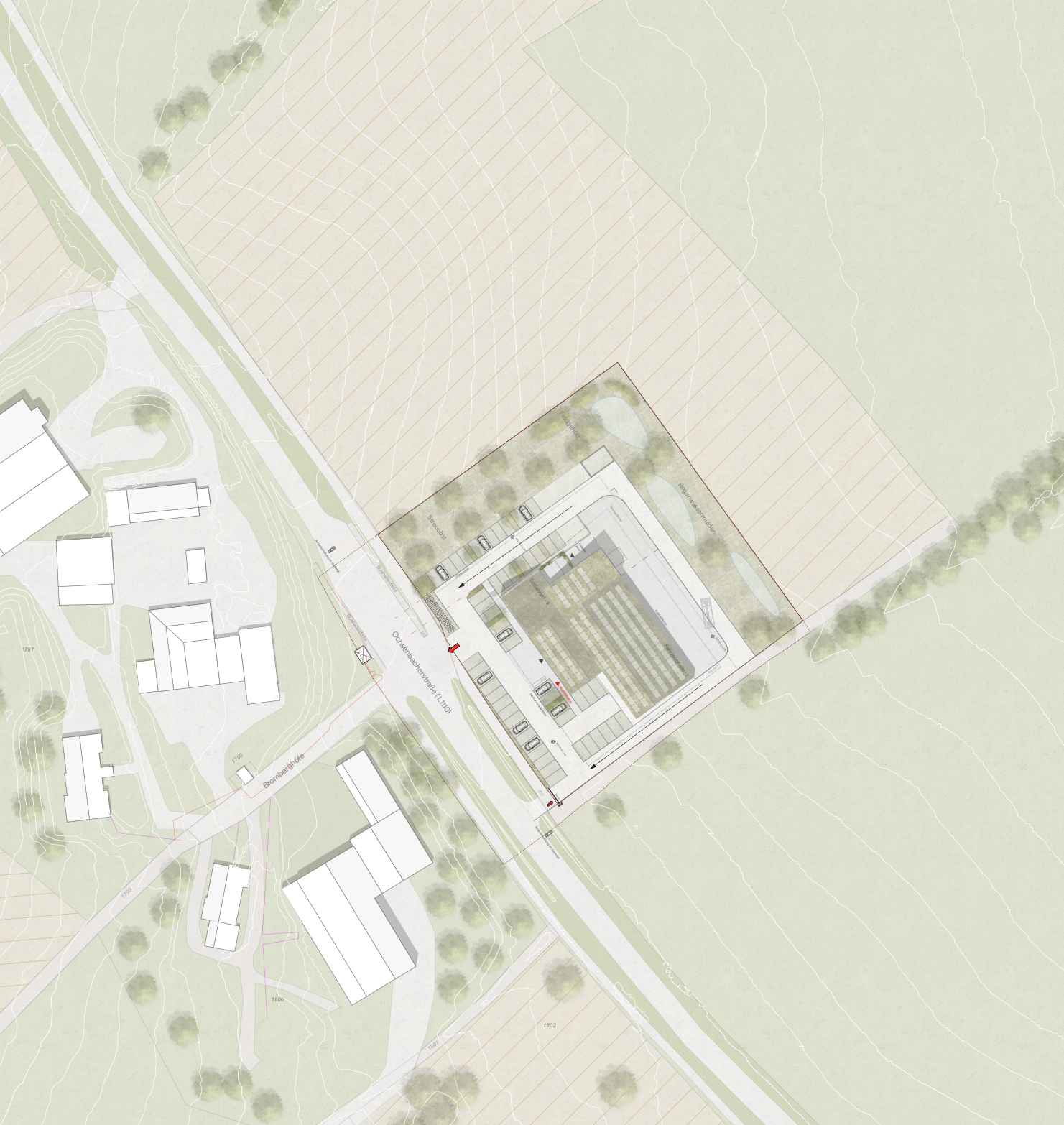
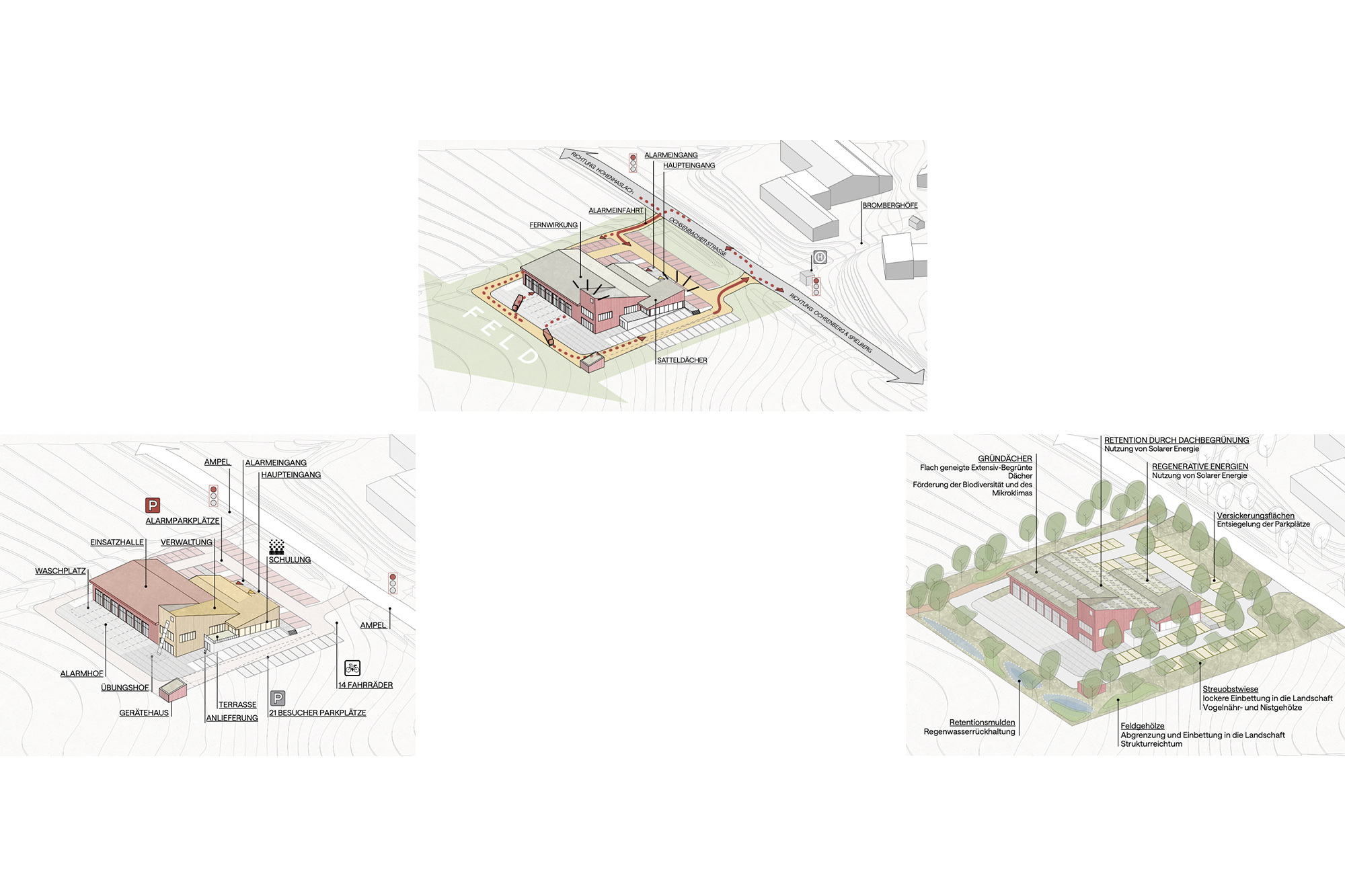
The fire station complements the Bromberghöfe opposite to form a small hamlet on the L1110. The existing tree population with groups of trees and hedges extends downhill across the property and is incorporated into the outdoor facilities. Loosely spaced trees surround the emergency and visitor parking spaces, training yard, and vehicle parking areas, becoming denser at the edges to form groups of trees and shrubs, and merging into extensively used meadows, field hedges, and groups of trees on the valley side. From the northwest, orchards integrate the building transparently into the landscape. Parking spaces and undeveloped areas remain largely unsealed; rainwater is directed into meadow hollows via green roofs, tree crowns, and vegetation areas, while polluted surface water is collected via purification stages. Heavy rain flows off green areas and hollows.
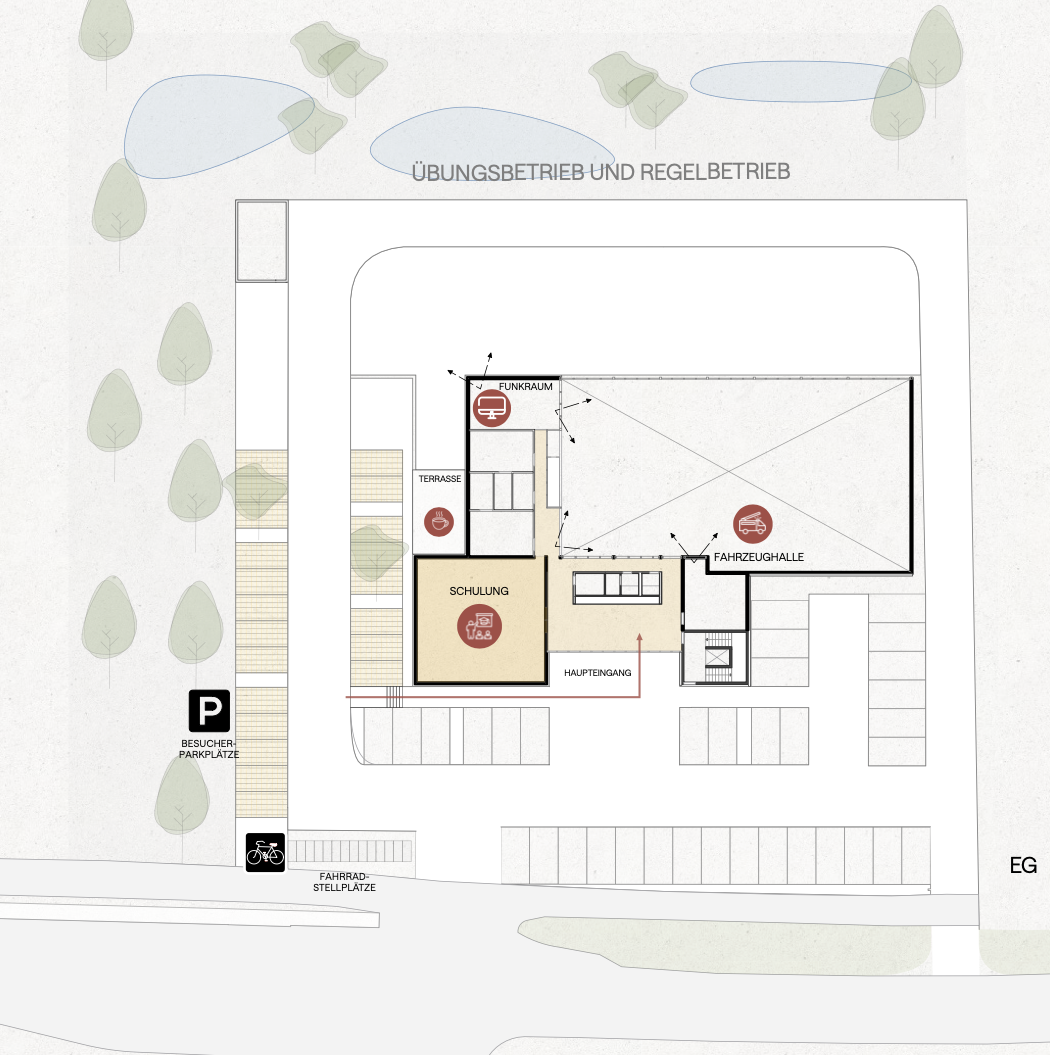
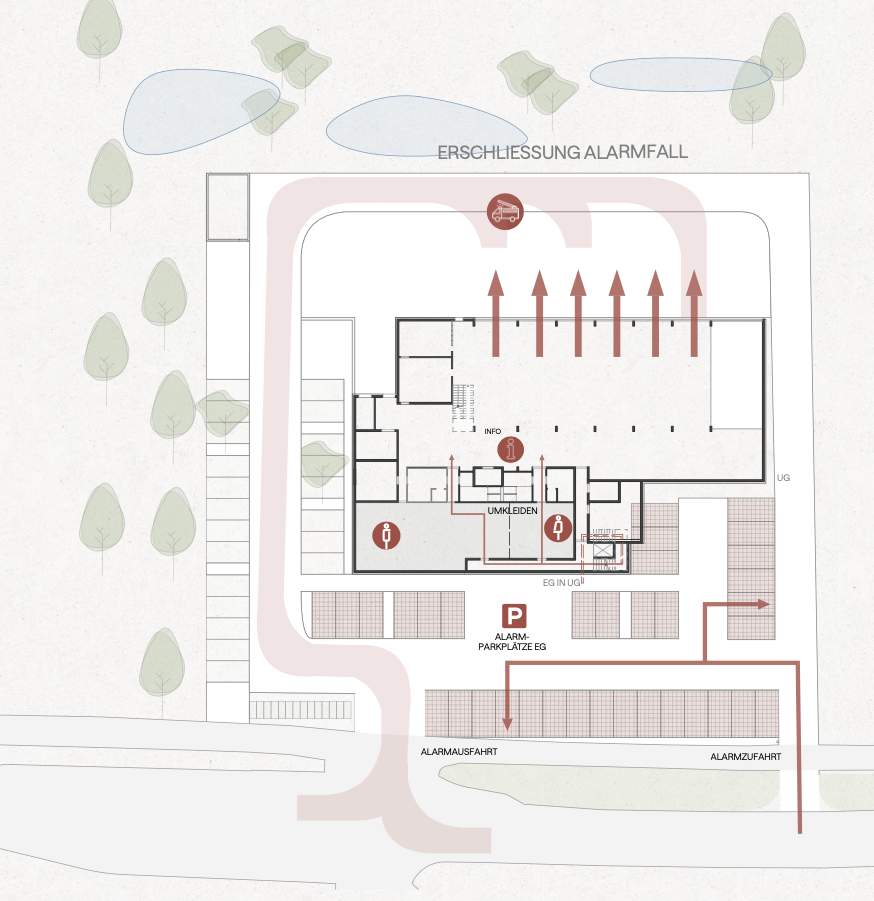
The vehicle hall is located on the lower level of the site, embedded in the ground, which reduces construction volume and energy consumption. Directly adjacent are the changing rooms for the emergency services, which thus have a crossing-free transition to the hall. Publicly accessible rooms, administration, and training facilities are located at street level and form the address-defining front of the building. Alarm and visitor parking spaces are also located on this level, allowing emergency personnel to reach the alarm reception immediately. A clear vertical connection leads from there to the changing rooms and on to the vehicle hall, keeping the alarm chain logical and short.
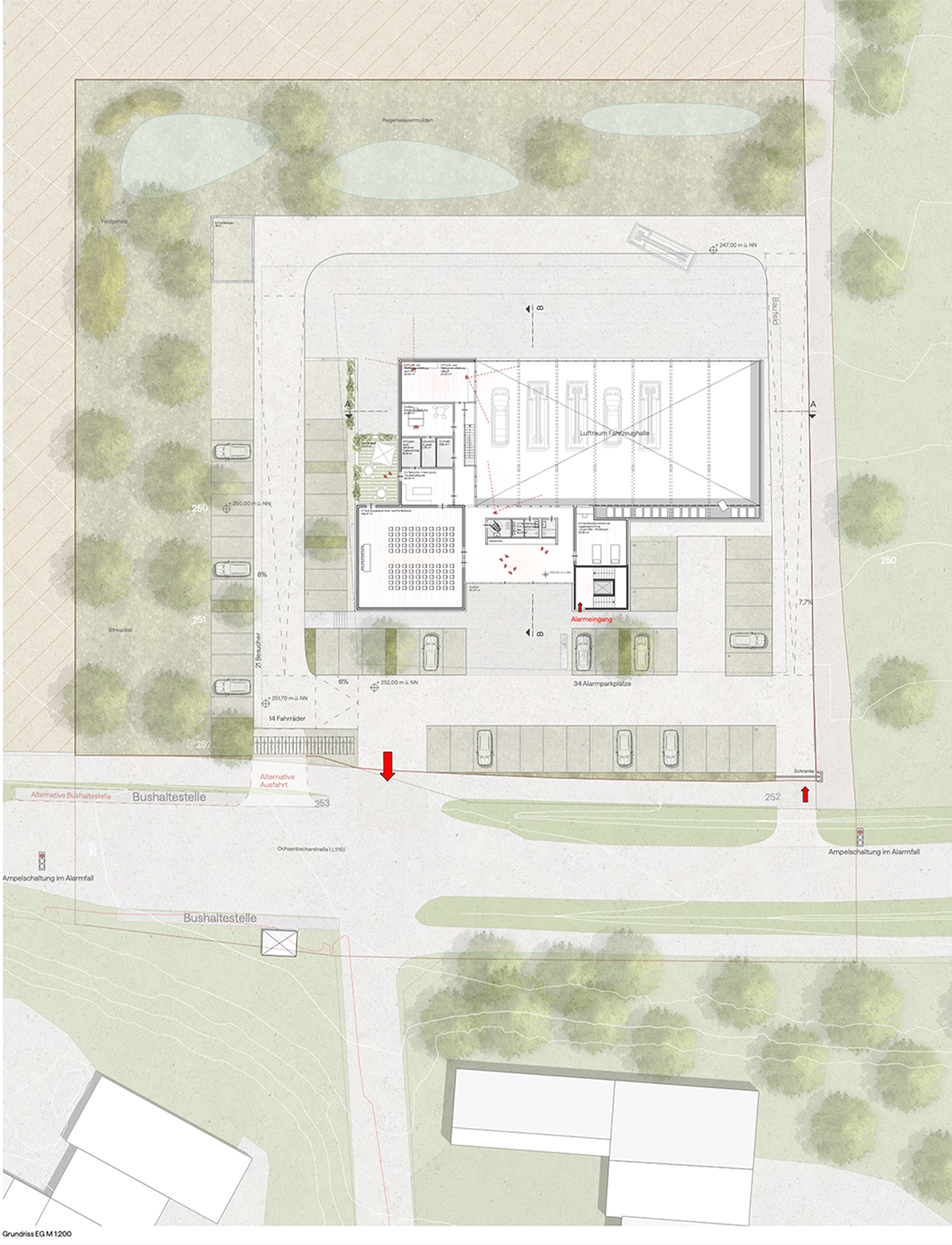
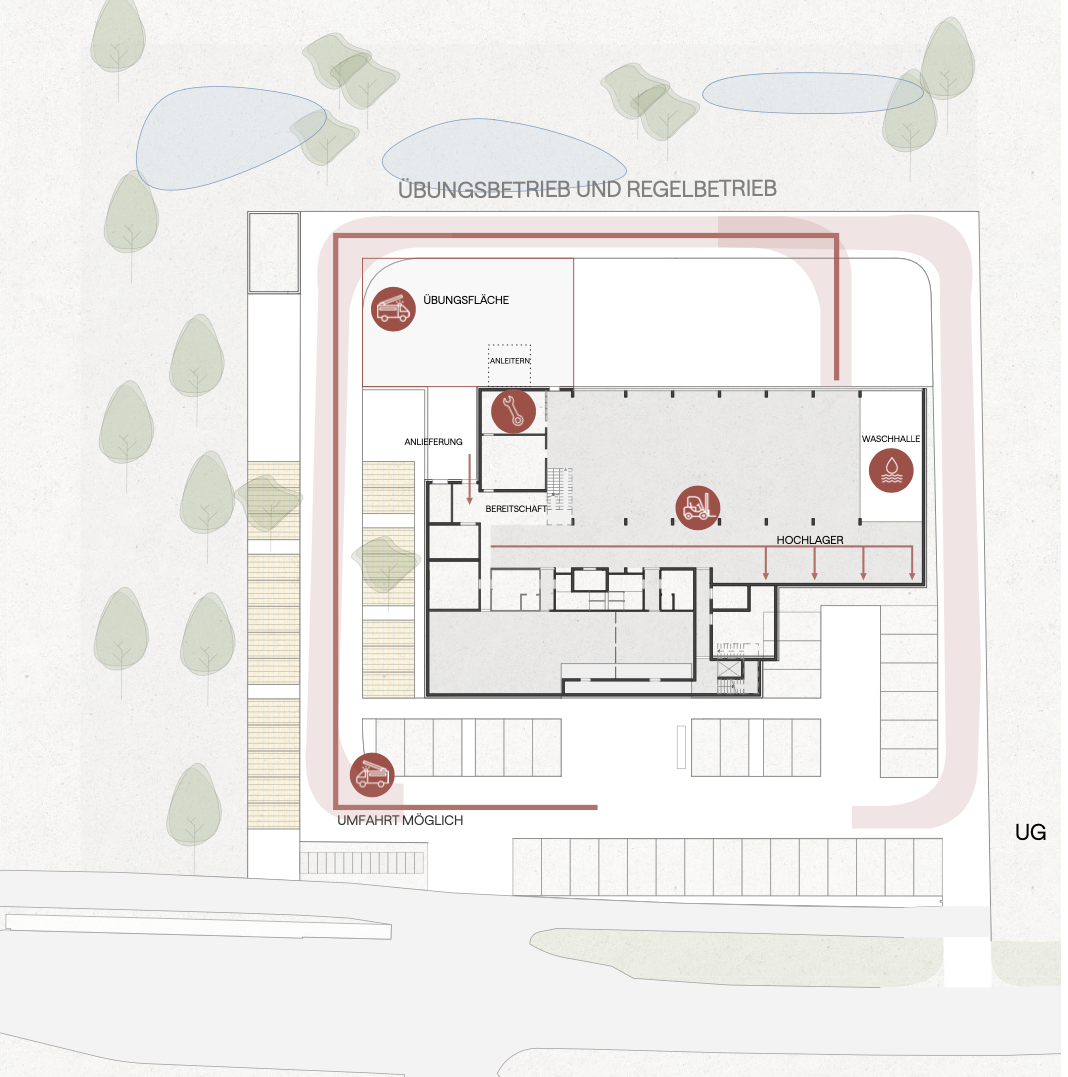
Regular operation and training operation Ground floor
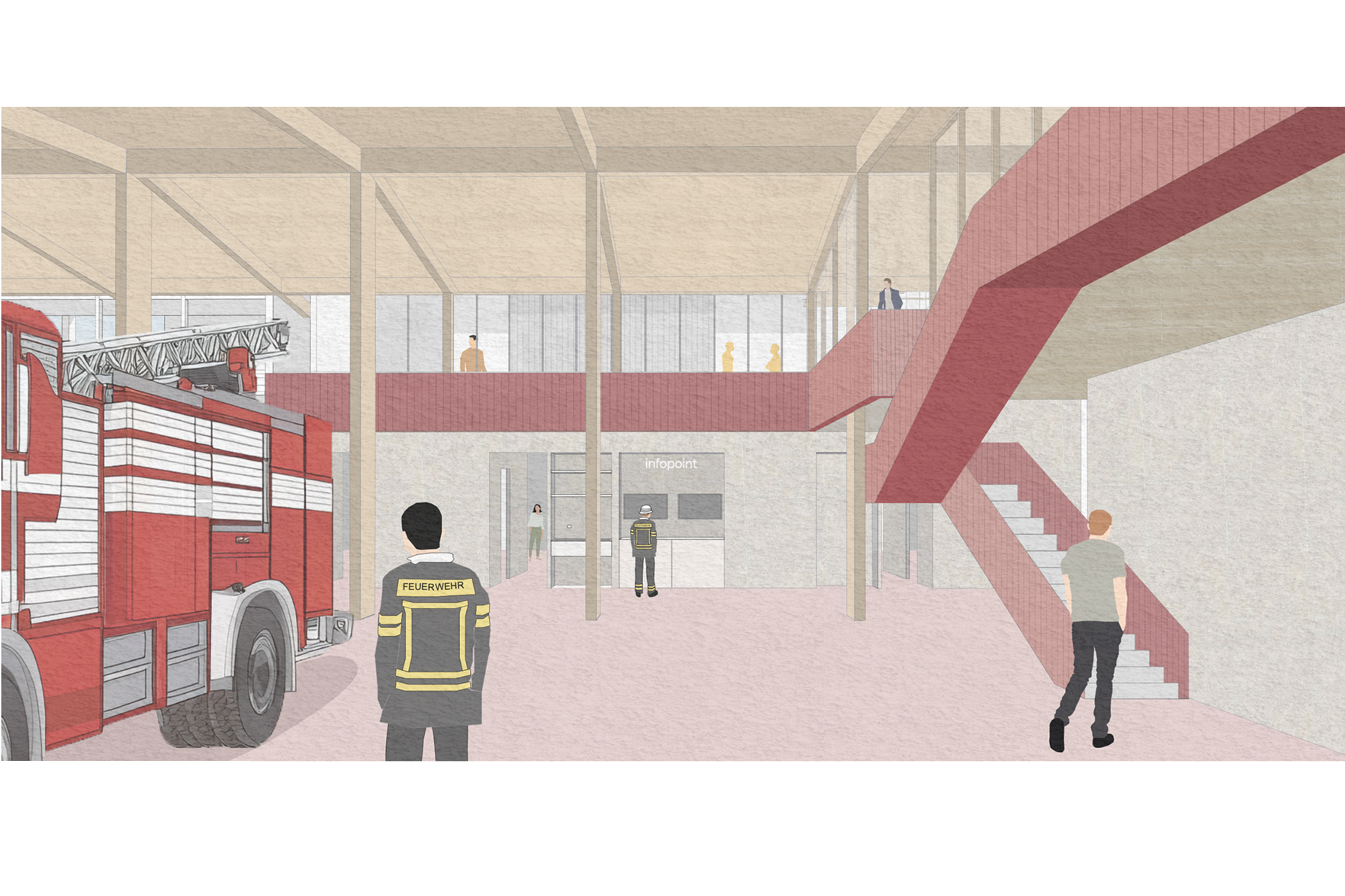
The entrance area, training room, and administrative offices with their ancillary areas are located onthe ground floor, at street level. This area forms the address of the building and is also the central arrival point for visitors and emergency services. The emergency parking spaces and visitor parking spaces are directly adjacent to this level, ensuring short distances. From the foyer and the administrative areas, there is a direct line of sight to the vehicle hall one level below. This spatial connection supports a continuous overview of the technical core of the building, both during regular operations and during training exercises. While administrative processes and training activities take place here during regular operations, the clear line of sight during training exercises enables safe observation of operational preparations and vehicle movements. The functional interlocking of both levels ensures efficient processes and a quick transition between everyday life, training, and operations.
Access in case of emergency
Arrivingemergency personnel can immediately reach the designated emergency parking spaces with their private vehicles via the emergency access road. The building's emergency entrance, which leads directly to the stairwell, is located right next to this area. From there, emergency personnel can quickly and directly access the changing rooms in the basement. The vehicle hall, where the emergency vehicles are stationed, is located immediately adjacent. In the event of an alarm, the rapid deployment process takes place from here via the north side of the building. A traffic light system at the exit ensures safe and speedy access to public roads and prevents conflicts with other traffic.
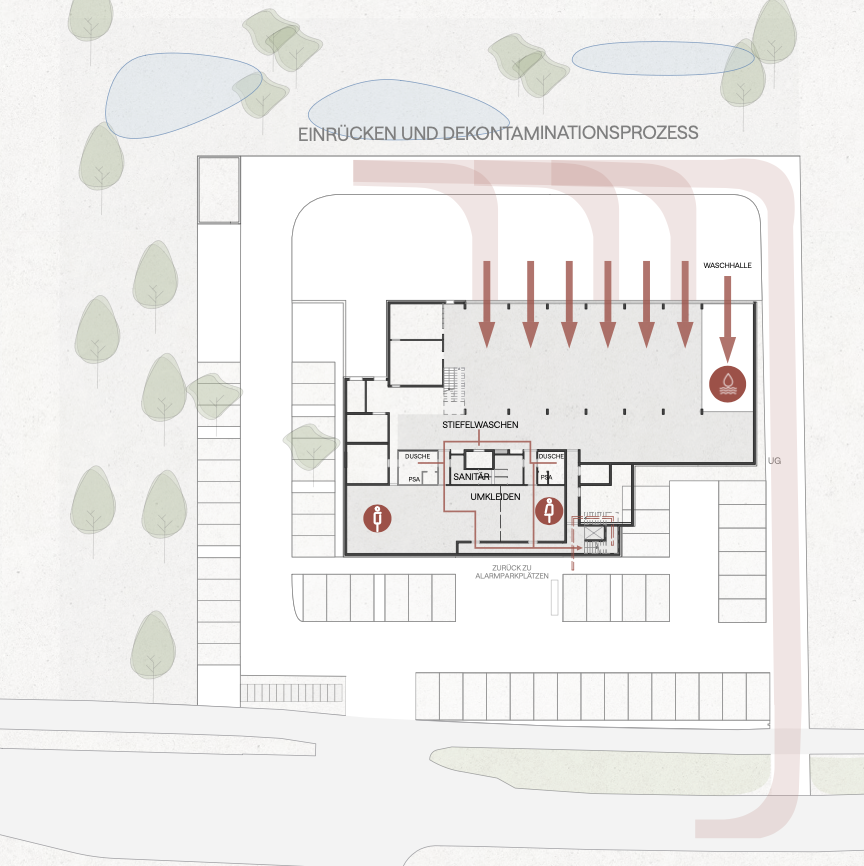
Induction and decontamination process
Thoroughnessand convenience are top priorities when pulling in, and the design consistently supports this. Emergency services can drive their vehicles directly into the vehicle hall via the emergency entrance. The property offers sufficient space for comfortable entry, maneuvering, and reversing of vehicles without disrupting operations. Inside the building, a clear and functional sequence of rooms, starting with the boot washing facility, through the black areas, to the showers and changing rooms, ensures short, intuitive, and efficient routes. This sequence enables consistent hygiene and a structured decontamination process after each operation.
More views
New Fire Station in Zaberfeld
New Fire Station in Nöttingen-Remchingen
New fire station in Haltingen
Dunningen fire station