
New fire station and emergency response center in Baden-Baden – Function and order in urban space
The construction of the new fire station and emergency response center in Baden-Baden will create a highly functional building complex that is also sensitively integrated into the urban landscape. The design combines clear organization, short response times, and a robust architectural language with strong integration into the landscape and surroundings.
Project data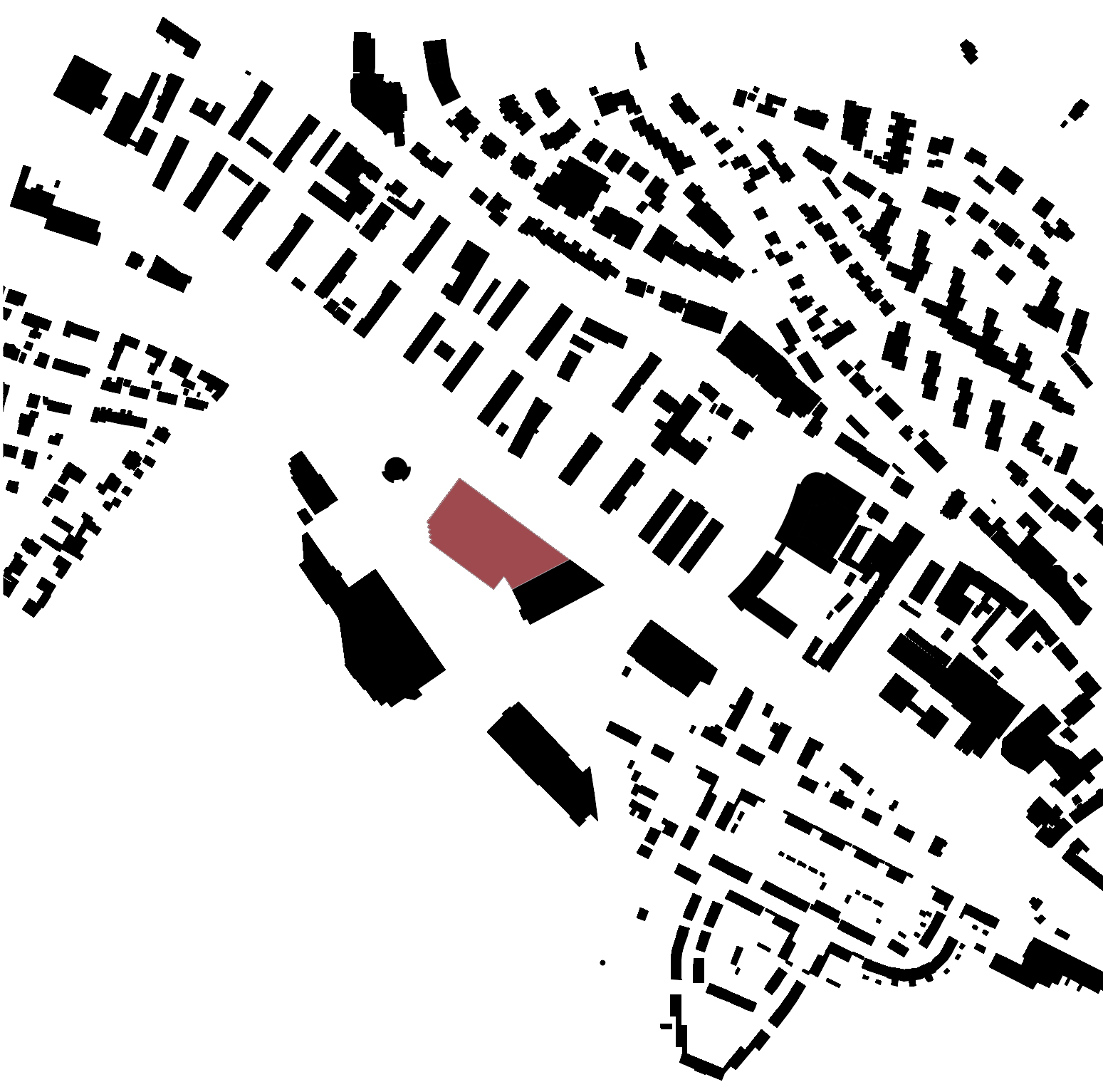
Urban planning and architecture
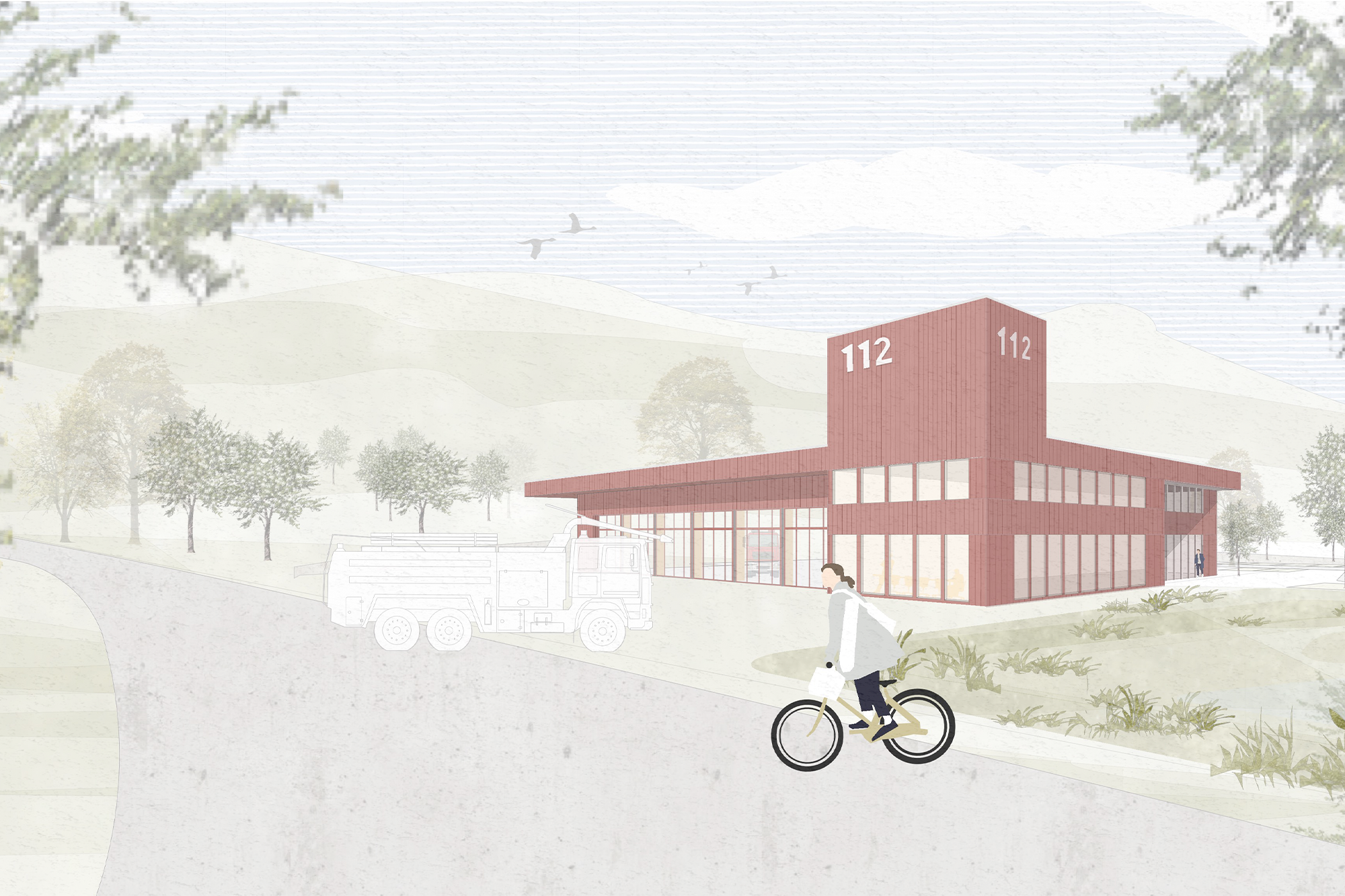
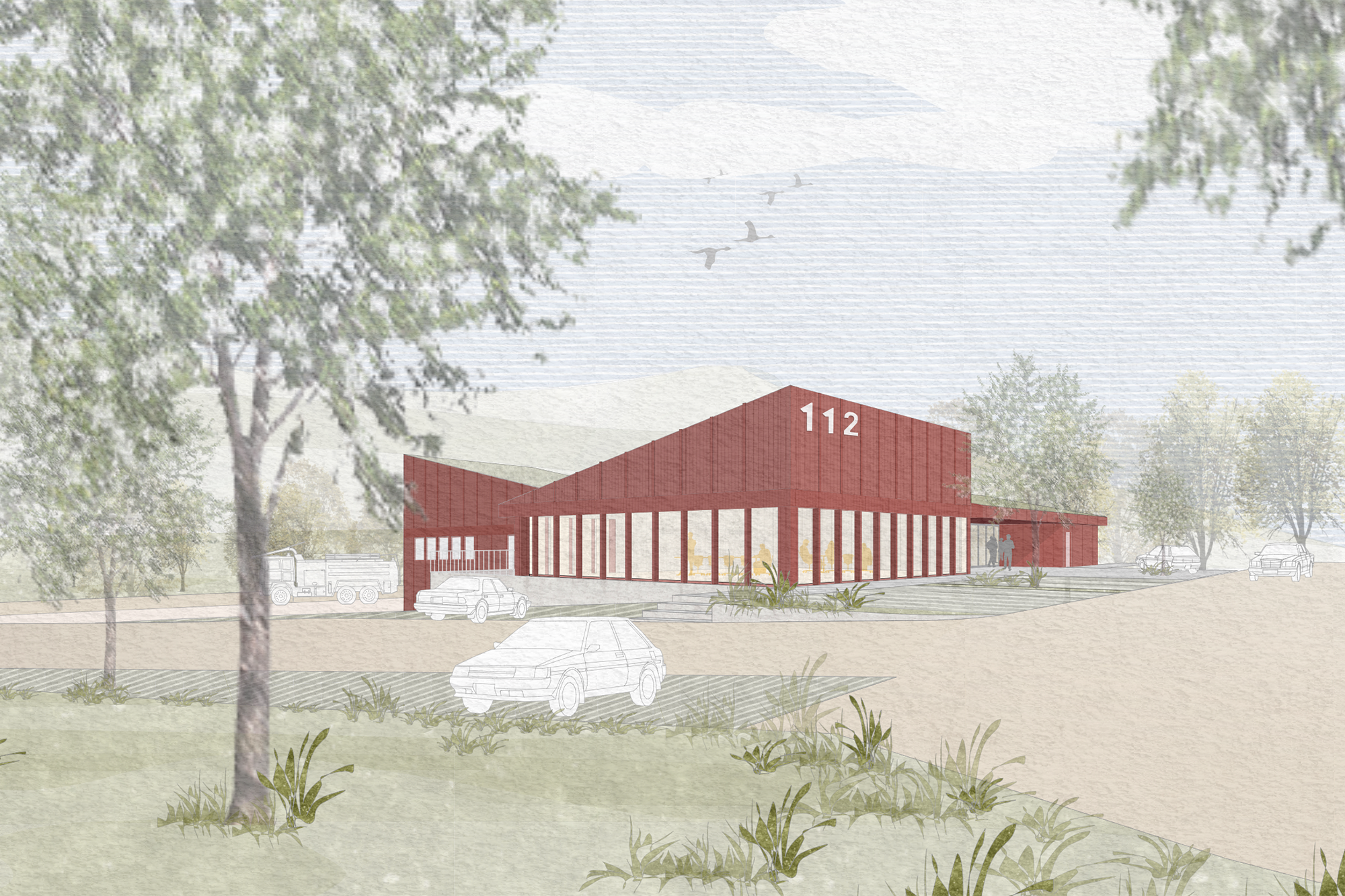
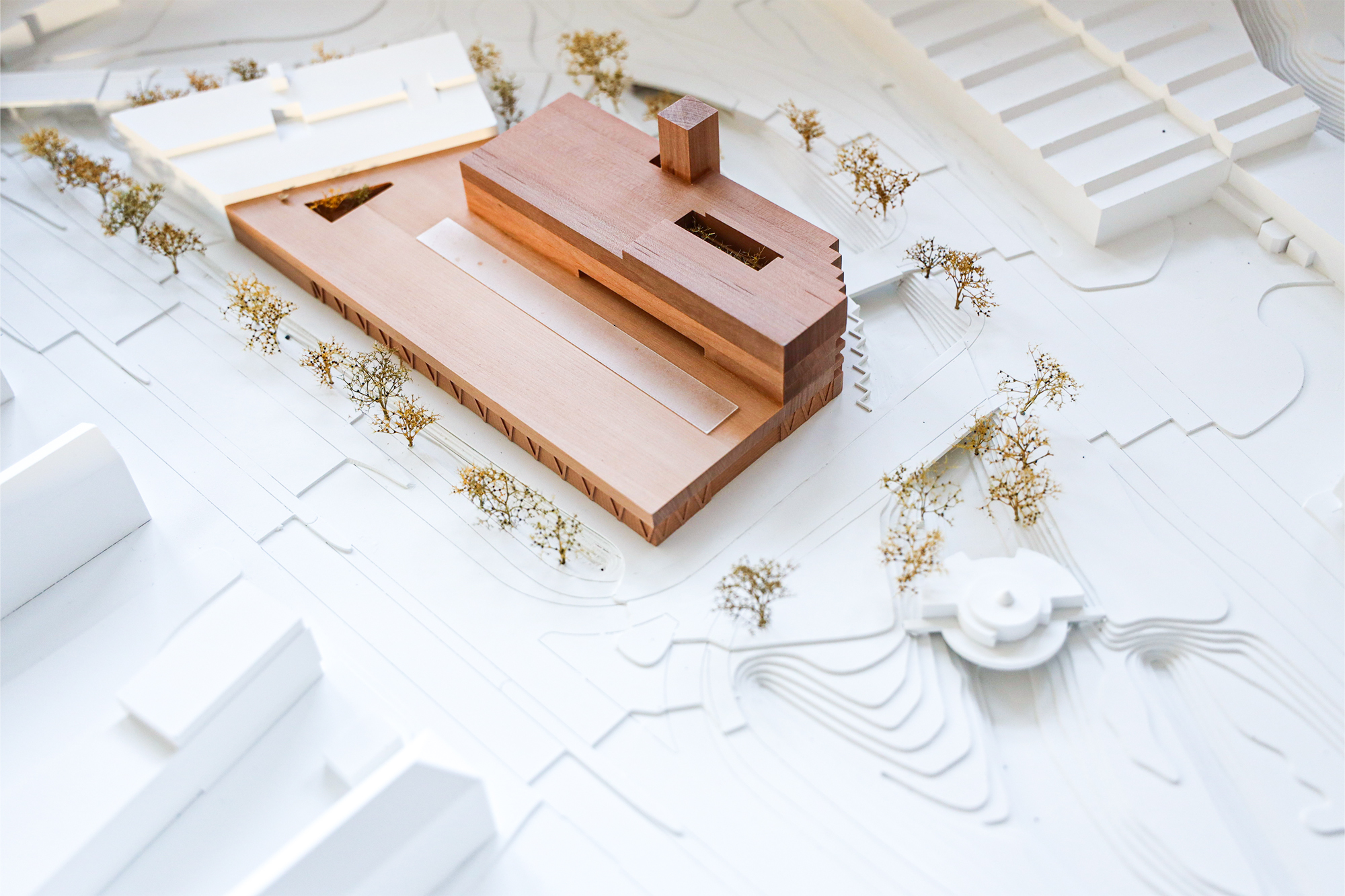
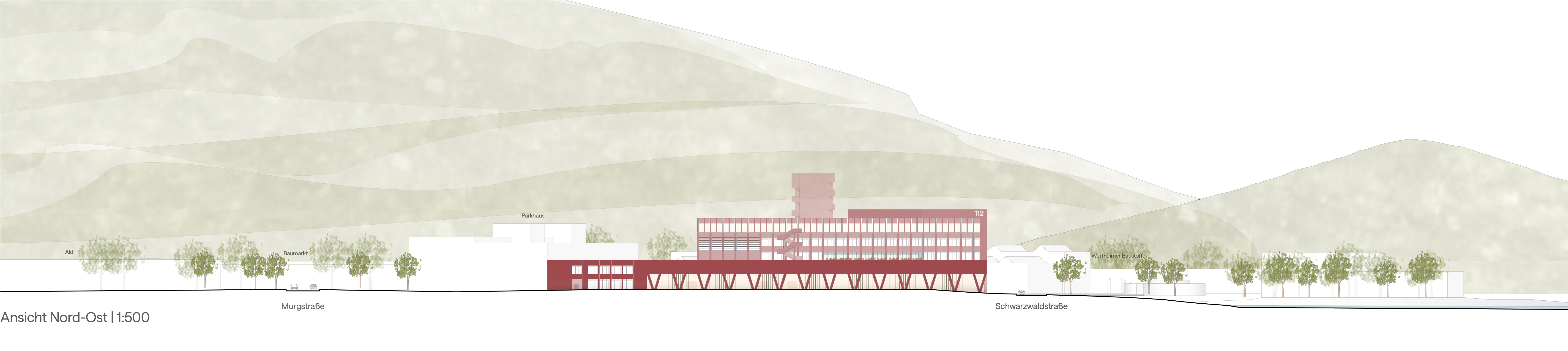
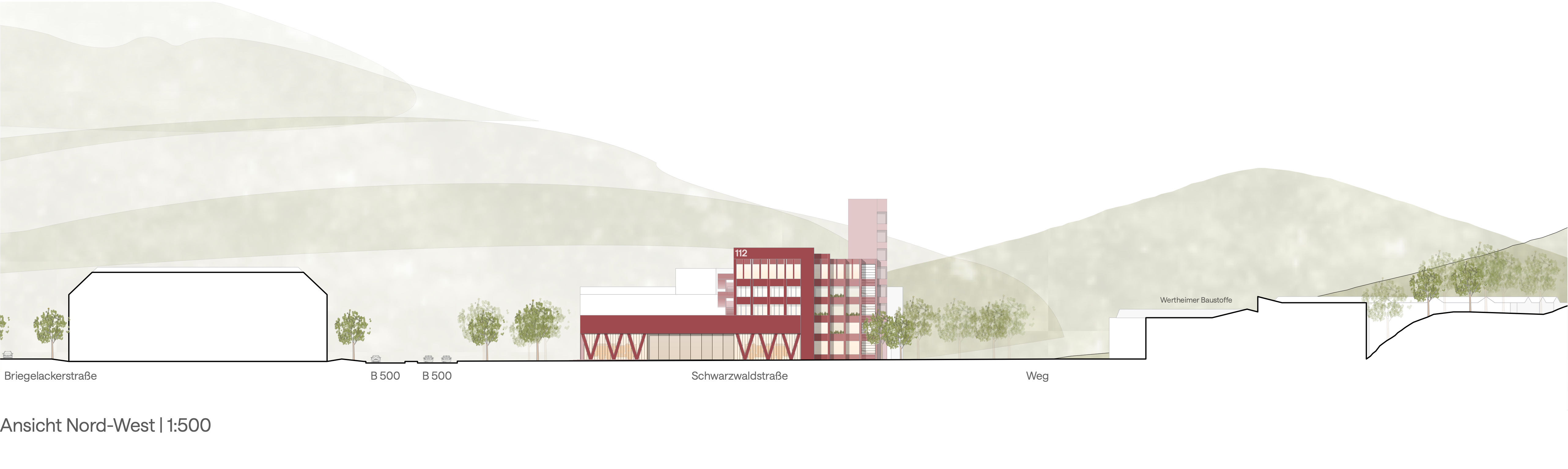
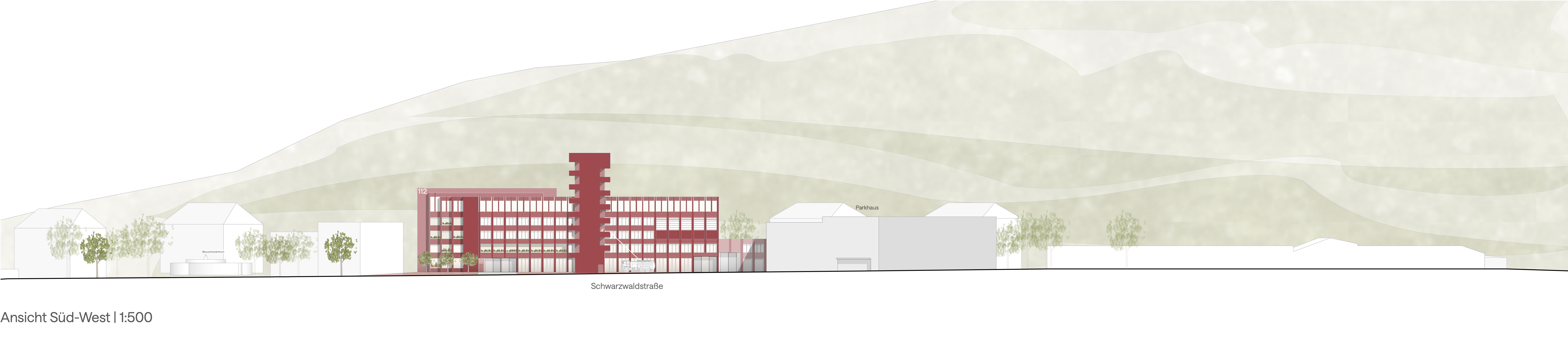
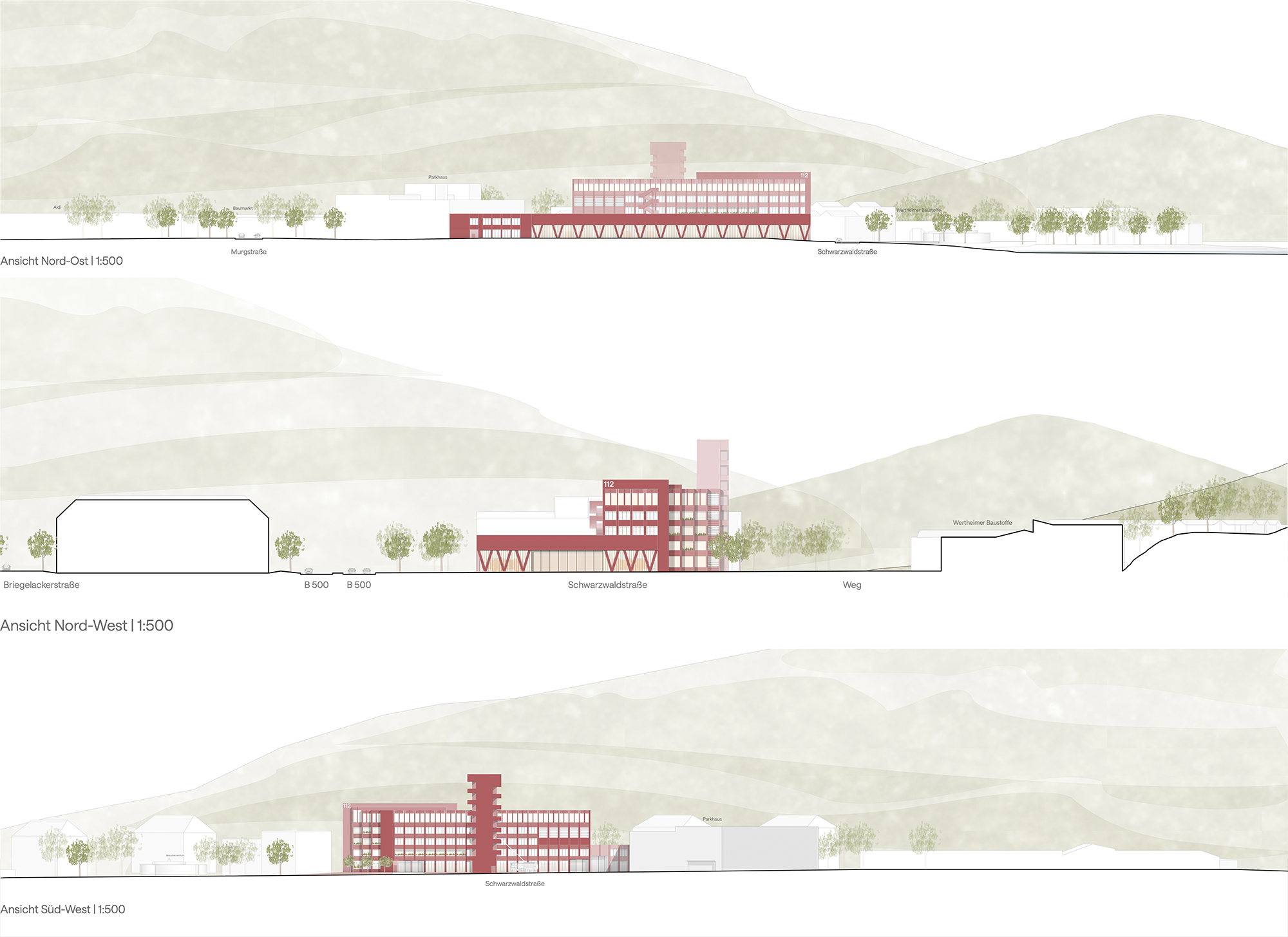
The new fire station with the Baden-Baden emergency response center occupies a prominent urban position at the western entrance to the city. The building consistently follows the building lines of Europastraße in the northeast and the connecting road in the northwest. To the southeast, the building connects directly to the existing parking garage and takes over its building line. The building structure, which is stepped to the west, sensitively mediates with the adjacent smaller-scale development.
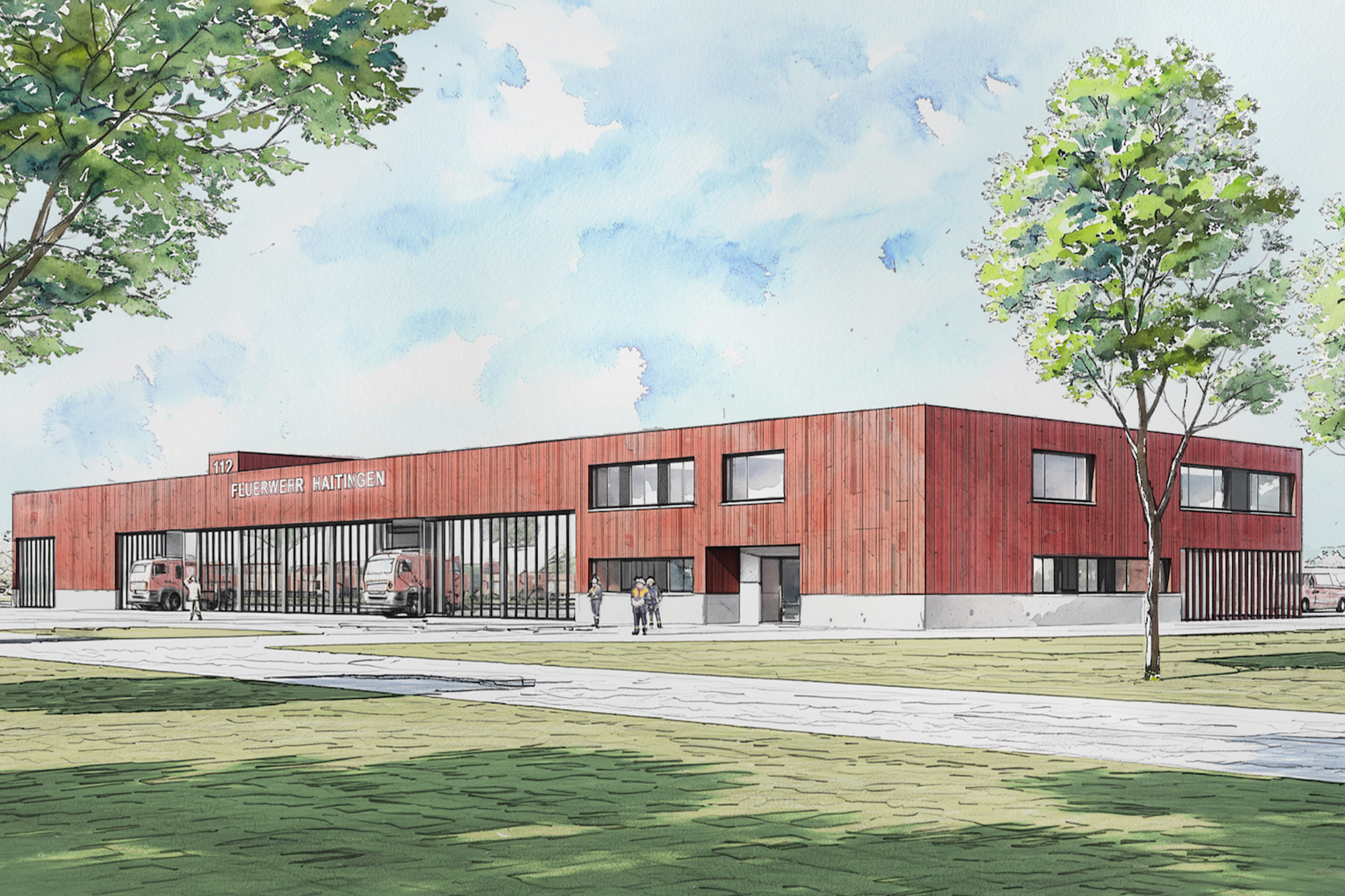
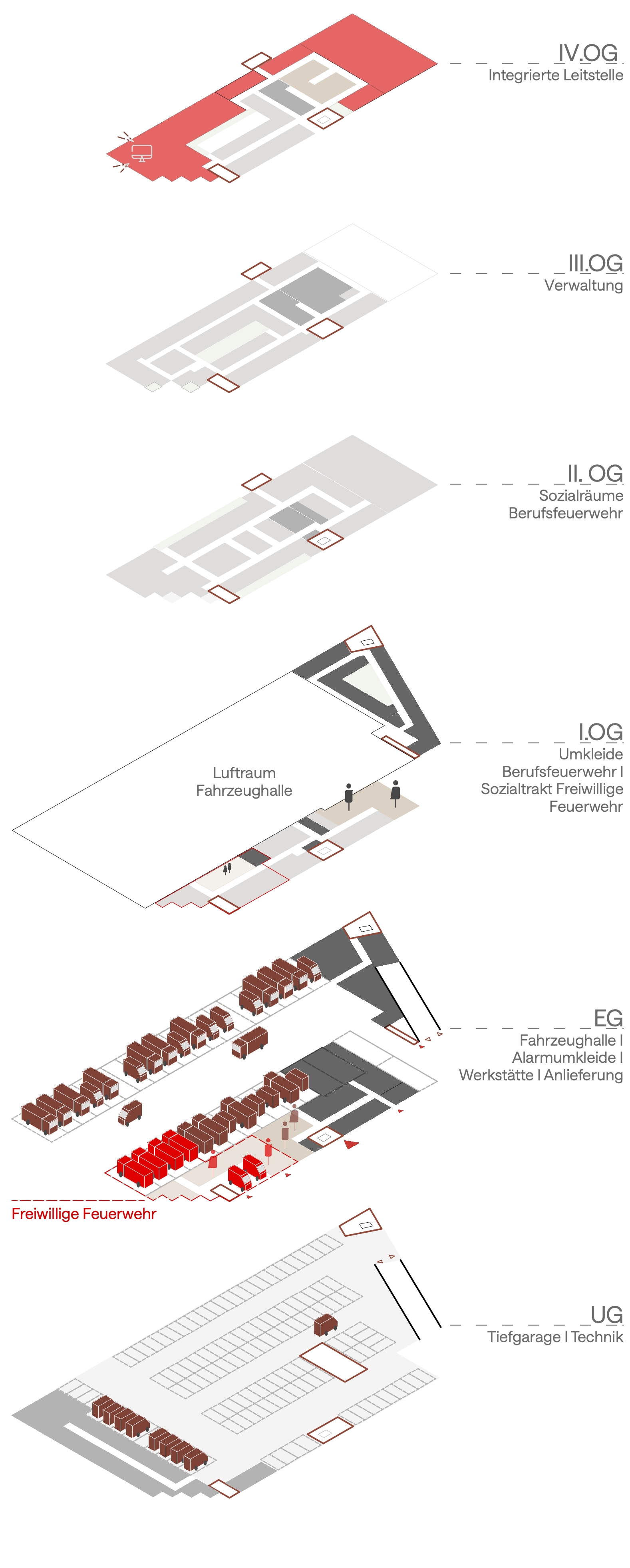
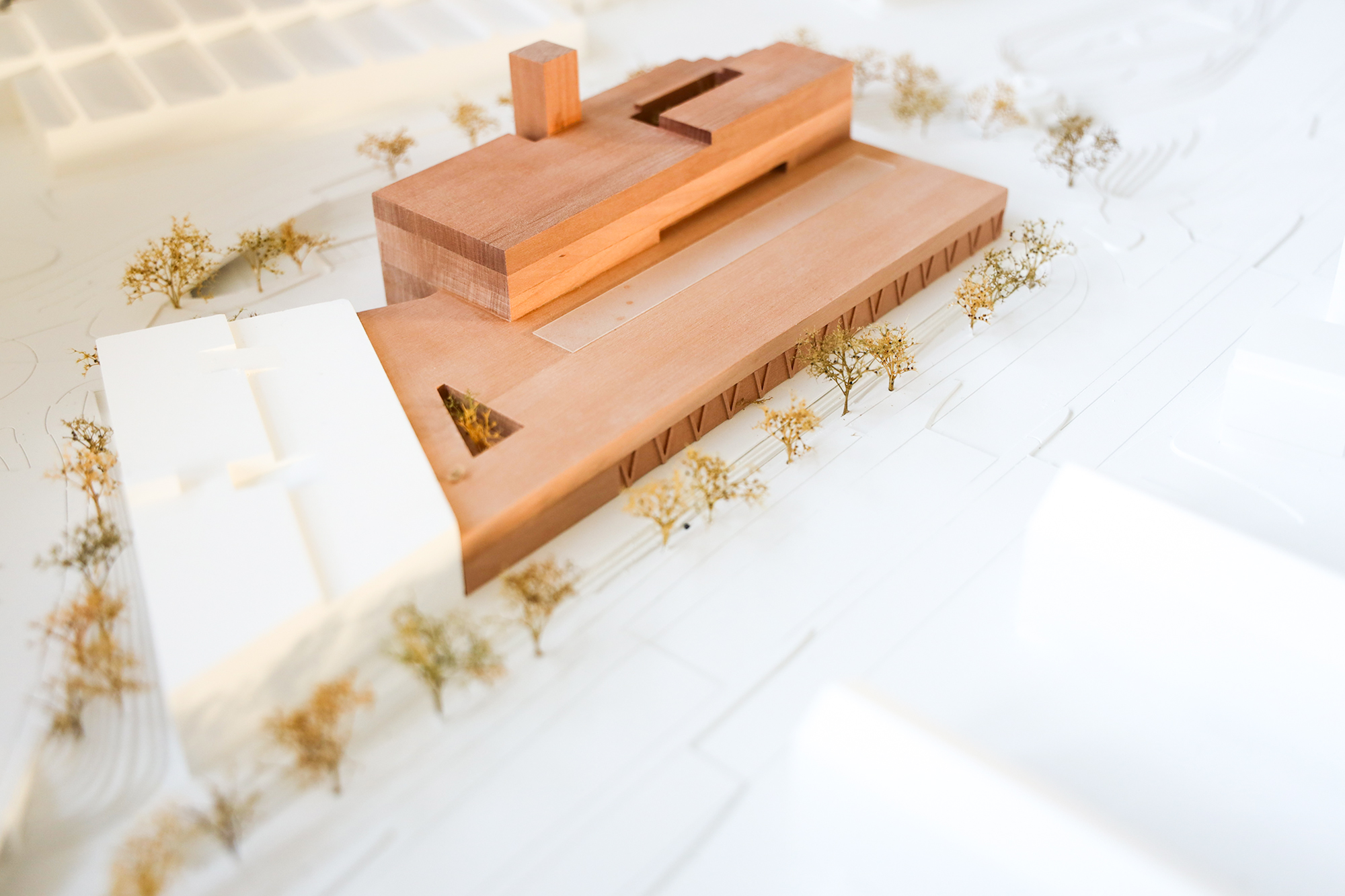
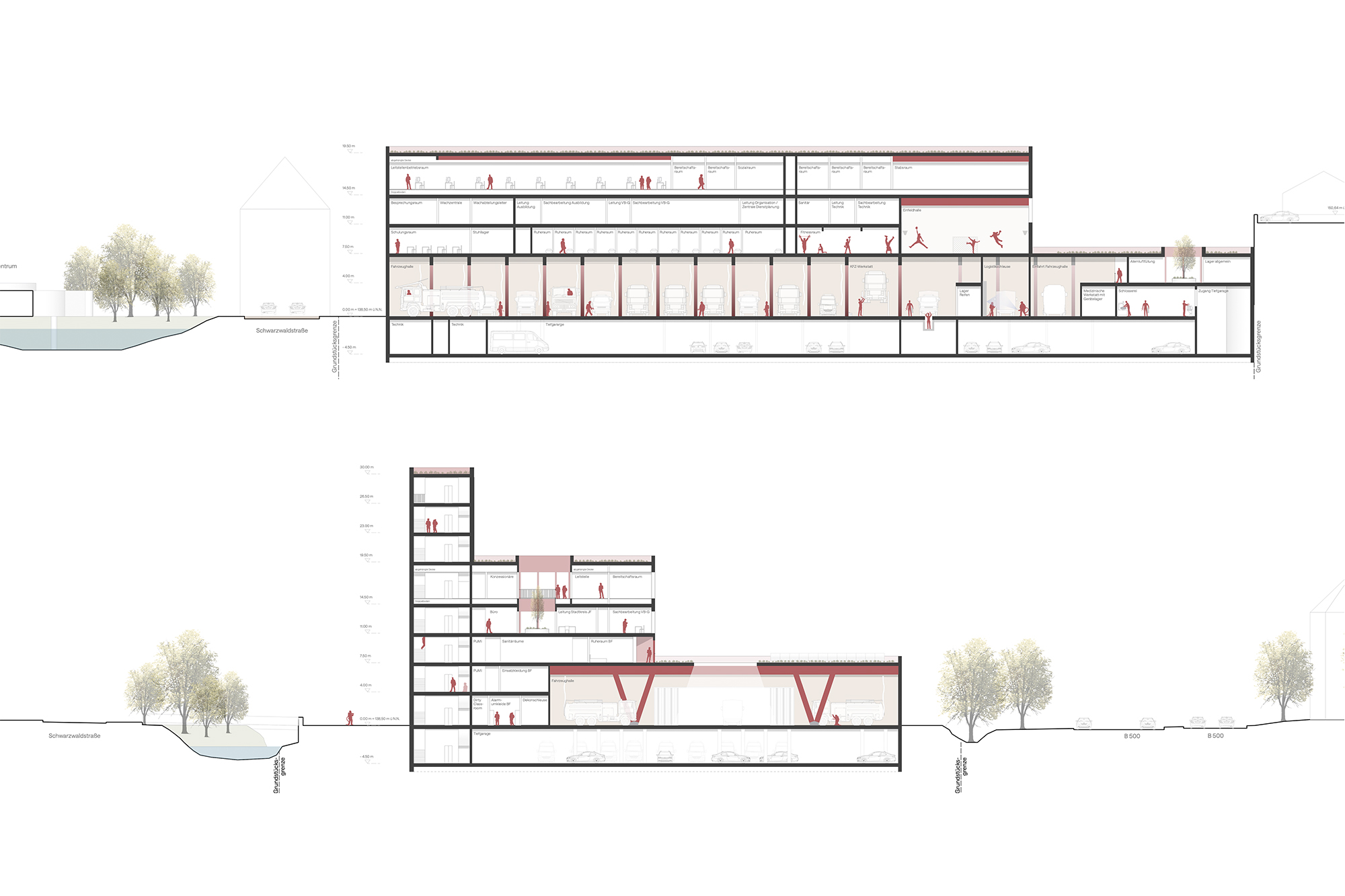
The building has a clear functional and architectural structure: a horizontal, flat base houses the vehicle hall on the ground floor and workshops and storage areas on the first floor. Above this base, the other uses are arranged vertically: the sports hall and recreation areas are located on the second floor, the administrative offices on the third floor, and the control center on the fourth floor. Each floor has a clear functional assignment.
The spatial separation between the volunteer fire department in the southwestern part of the building and the professional fire department with its control center in the rest of the structure is consistently supported by separate entrances and differentiated access systems. The 30-meter-high training tower is deliberately detached from the main structure and forms a highly visible, identity-defining landmark. The main entrance with a square in front faces the main road. This publicly accessible open space also serves as a training area for the fire department and creates a clear address in the urban space.
Development and outdoor facilities
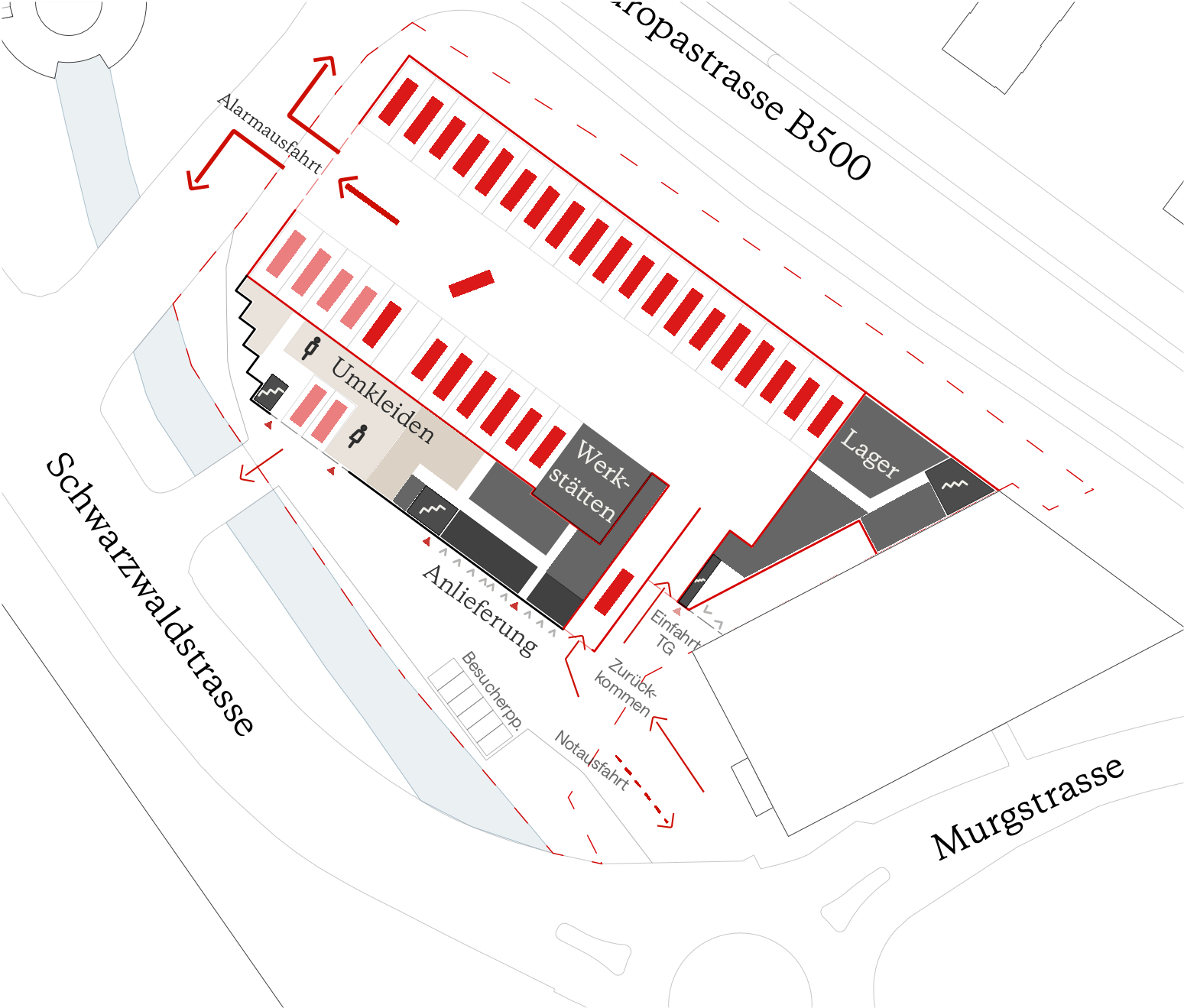
The building's access routes are clearly differentiated in terms of function and designed for smooth operational use. Emergency vehicles reach the fire station via the newly planned roundabout in the southeast, while the exit is via the connecting road between Europa- and Schwarzwaldstraße. This separate traffic routing prevents traffic jams and ensures a quick and safe exit in case of an emergency. Regular car traffic is also routed via the roundabout, consistently separating emergency and everyday traffic.
The outdoor facilities are designed as an integral part of the project. A spacious forecourt is being created along Schwarzwaldstraße, which will serve as a training area for the fire department and also enhance the building's public presence and accessibility. Bicycle parking spaces and visitor parking spaces in the immediate entrance area complement the open space concept and contribute to a clear and well-organized layout.
Internal access is provided by three independently organized stairwells, each serving specific areas of the building: one stairwell for the volunteer fire department, another for the professional fire department and administration, and a third for the vehicle hall and underground parking garage. This clear separation enables differentiated safety and usage concepts. Short distances within the building also guarantee fast response times. All floors are accessible without barriers.

Design and supporting structure
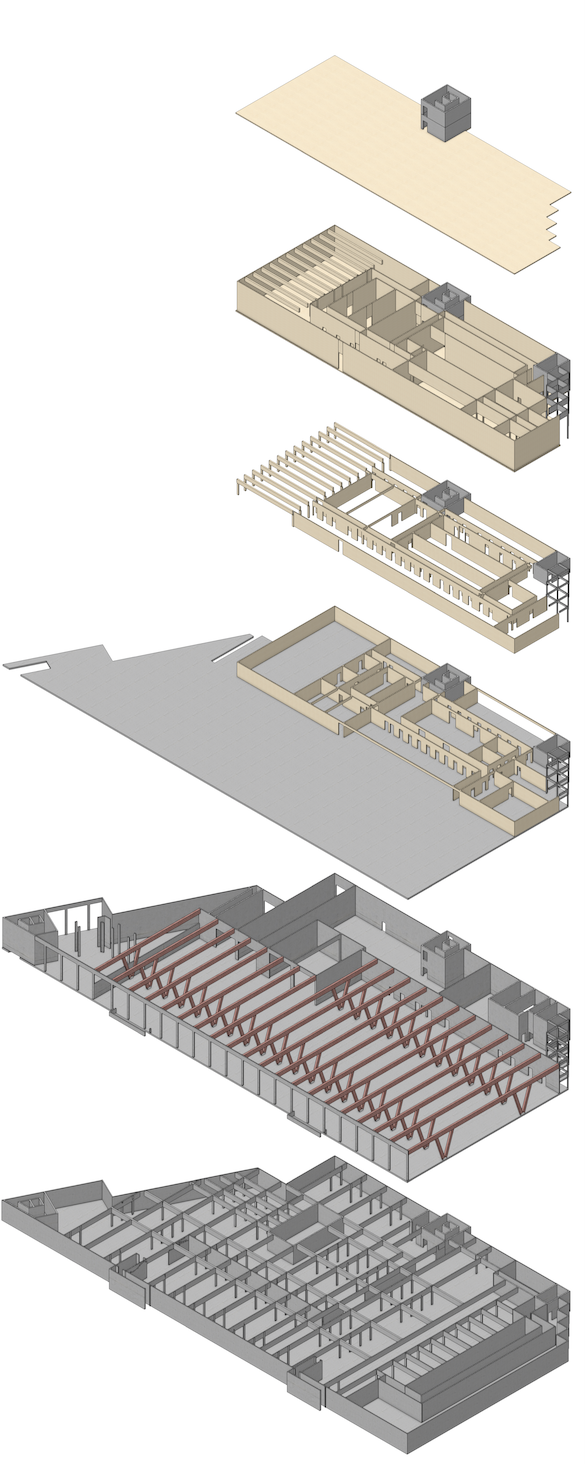
The new building consists of a vehicle hall with a two-story warehouse, a five-story office building, and a shared basement. Half of the top three floors of the office building are located above the vehicle hall.
The hall structure (approx. 87 m × 42 m) is constructed entirely of reinforced concrete. The main load-bearing elements are reinforced concrete frames spaced 4.5 m apart with beams approximately 1 m high, each resting on two internal V-shaped supports. This design allows for a span of 16.5 m and reduces the number of internal columns without compromising the 16 m wide driving area. At the same time, the frames efficiently transfer the loads from the upper floors.
The basement, the two-story warehouse, and the lower two office floors are also planned to be constructed of reinforced concrete. They consist of flat slabs, beams, columns, and wall panels. With the exception of the two reinforced concrete stairwell cores, the upper three office floors will be constructed using resource-saving timber. The main load-bearing elements here consist of cross-laminated timber ceilings and wall panels as well as glulam beams and columns. The ecological timber construction also reduces the dead weight of the building.
Vertical loads are transferred via wall panels and columns, while horizontal loads are absorbed by the internal reinforced concrete access cores. The foundation is currently planned as a shallow foundation via a floor slab, based on an expert opinion from 2008. A new building site survey may necessitate an adjustment of the concept.
Economic efficiency
The compact and clearly structured building design ensures high space efficiency and maximum usability, which contributes significantly to the cost-effectiveness of the new building. The simple building structure not only enables low construction costs, but also ensures low maintenance and operating costs in the long term.
A sustainable and efficient energy and climate concept with optimized cooling, heating, and ventilation technology significantly reduces energy consumption and lowers ongoing operating costs. The planned interim solution allows the entire construction project to be completed in a single construction phase, saving time, resources, and coordination efforts.

Fire protection and safety
The fire protection concept is specifically tailored to the requirements of a fire station. Clearly arranged escape and rescue routes, clearly defined fire compartments, and fire-resistant structures ensure a high standard of safety. The operational capability of the emergency services remains fully intact even in the event of a fire.
More views



The Fire Department of the Future
New Fire Station in Zaberfeld
New Fire Station in Nöttingen-Remchingen