
Open Learning Environments – Clear Structures
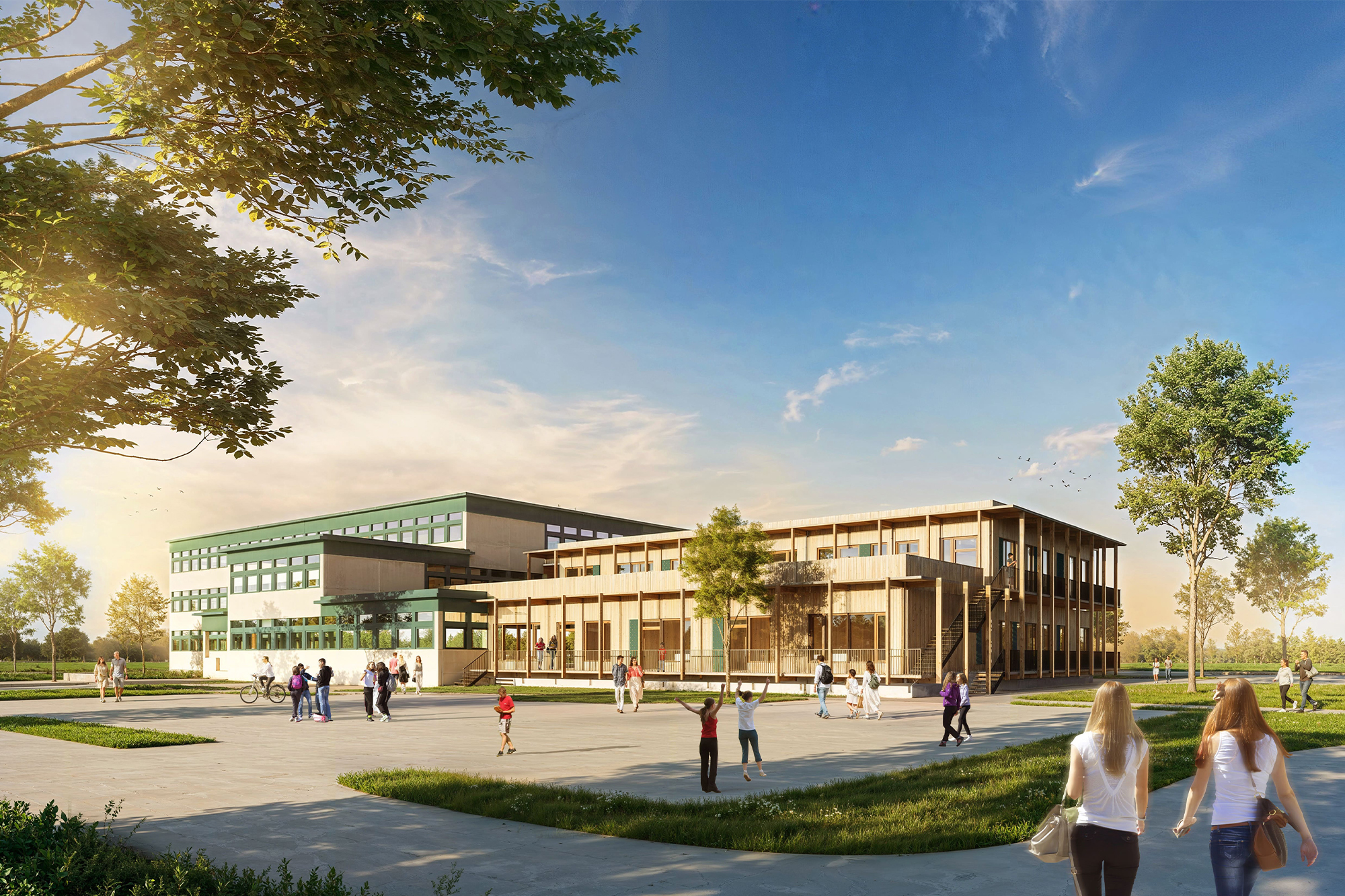
The conceptual study examines two design alternatives for the new Bodelschwingh School building in Geislingen. Both concepts aim to create a modern and inclusive learning environment, but differ in their spatial organization and the arrangement of the building structures. Common to both approaches is their sensitive integration into the sloping site and the development of a school campus that fosters a sense of identity.
Project data

Option 01 – Compact Campus
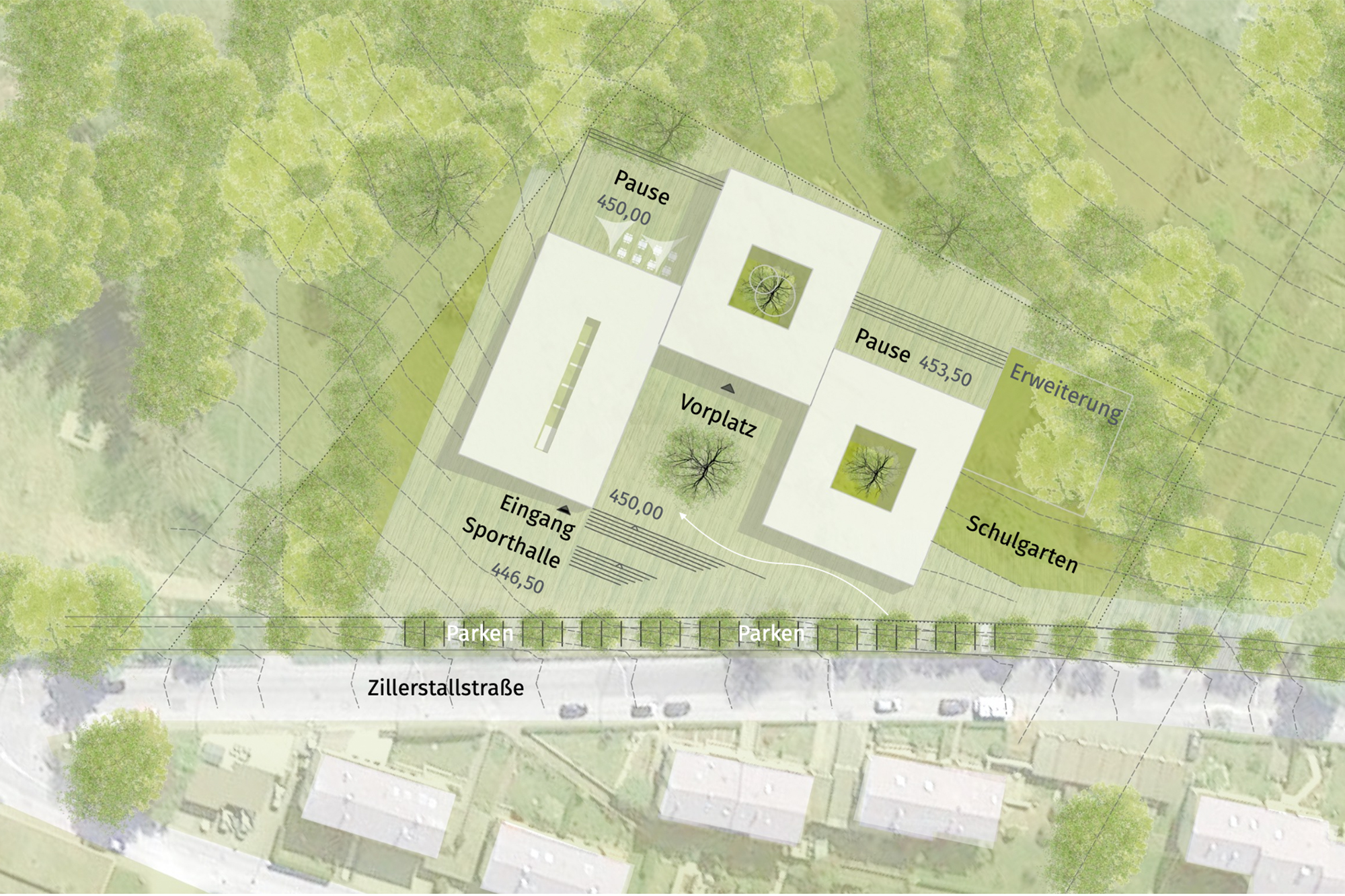
The first option features a compact building complex that combines the school buildings and the sports hall into a clearly defined ensemble. The buildings are arranged around communal courtyards, creating short distances and clear wayfinding. The sports hall is integrated into the hillside and, together with the forecourt and the main entrance on Zillerstallstraße, forms the central focal point of the campus.
The different levels follow the contours of the terrain. The foyer, cafeteria, and administrative offices form the school’s social hub, while the classroom areas are organized into manageable learning clusters. The courtyards serve as spaces for learning, socializing, and quiet reflection, and foster a connection to the surrounding landscape.


Option 02 – Open Campus with Potential for Development
The second option creates greater separation between the building structures, resulting in a more open campus with clearly defined open spaces. The classroom areas are also grouped around courtyards, creating sheltered learning environments. At the same time, the planned expansion area is integrated into the overall concept at an early stage, allowing for flexible future development of the school site.
The varied layout of the buildings creates a diverse range of outdoor spaces and fosters a closer integration between the school, the school garden, and the surrounding landscape.

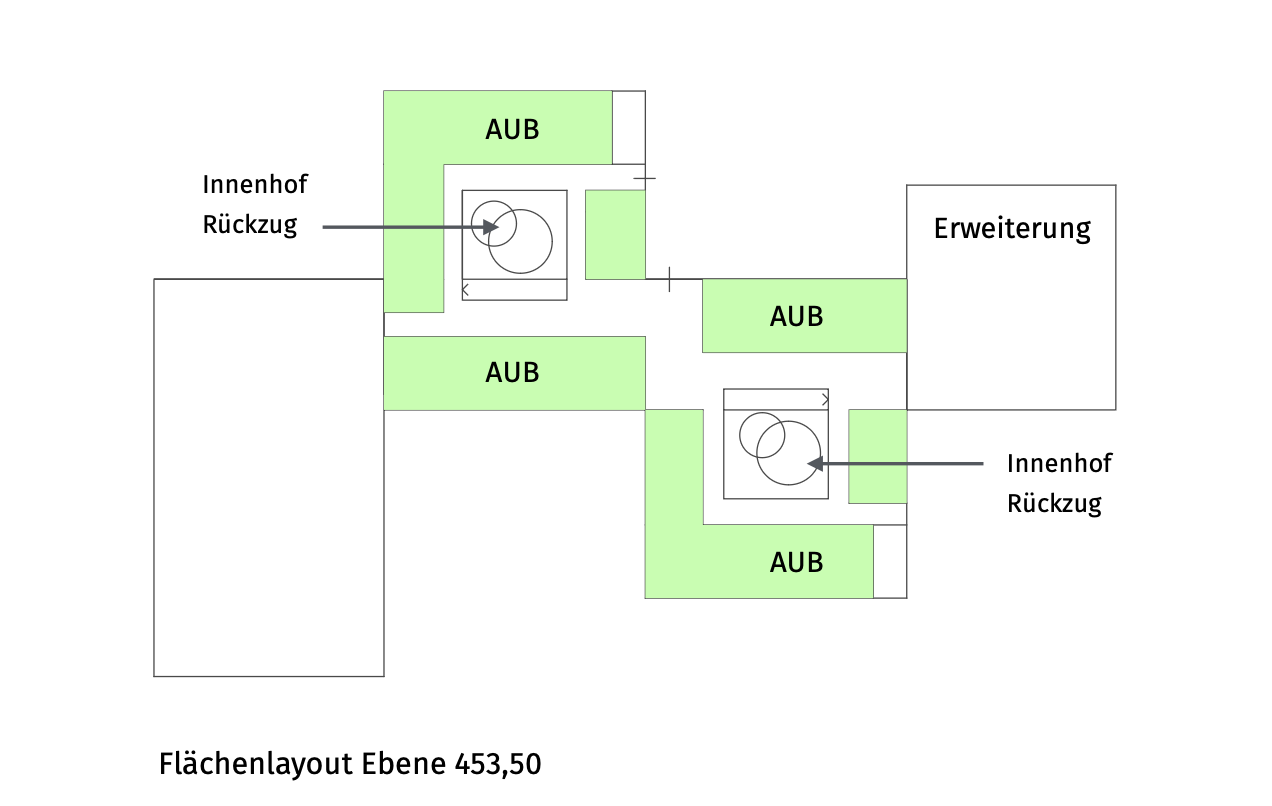


Floor Plan Concept
Common Design Principles
Both designs respond to the topography of the site and utilize the terrain to create a functional layout of the different levels. A key design principle is the creation of learning environments that offer a variety of spaces. In addition to classrooms, there are open learning areas, communication zones, and quiet retreats. The courtyards extend classroom instruction into the outdoors and strengthen the connection to nature.
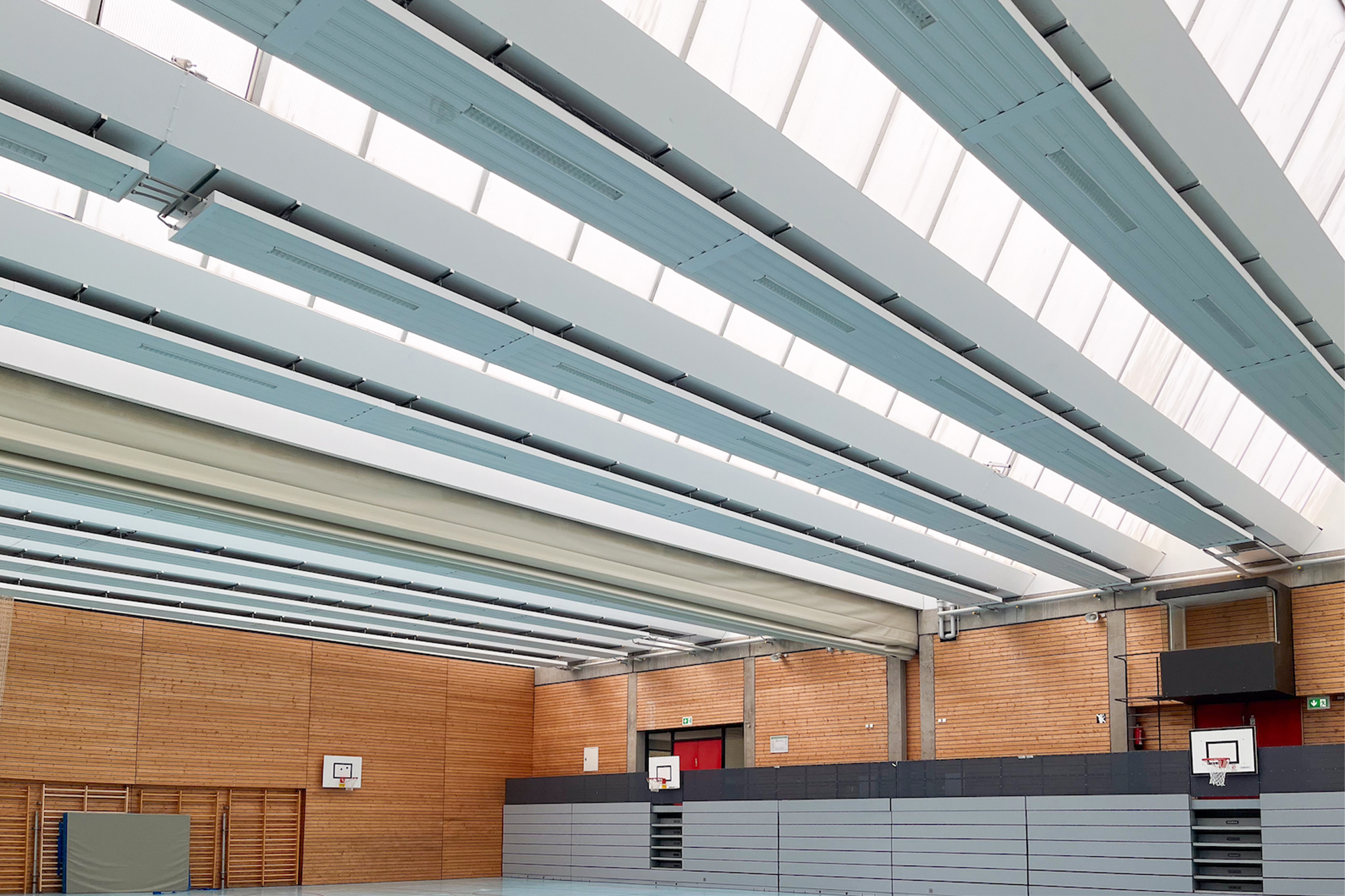
The sports hall is designed so that it can be used independently of school operations. Technical and storage rooms are functionally organized, and access is via a shared forecourt on Zillerstallstraße.
Conclusion
Both design options create a sustainable and future-proof school campus that combines learning, physical activity, and community. While Option 01 stands out for its compact layout and short distances, Option 02 offers a more open campus structure with greater flexibility and clear opportunities for future expansion.